
Last updated November 2, 2026
 Wrought iron
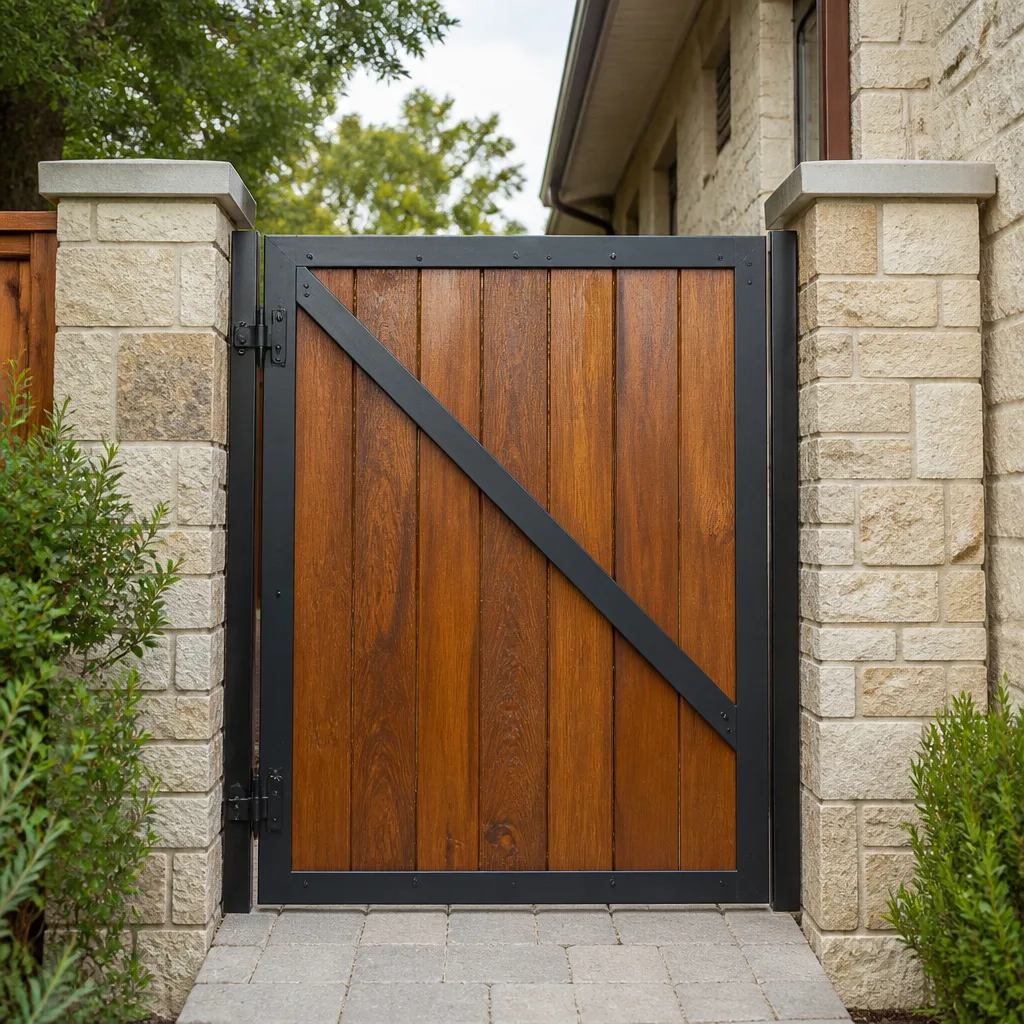 Wood & steel frame
 Farm & ranch
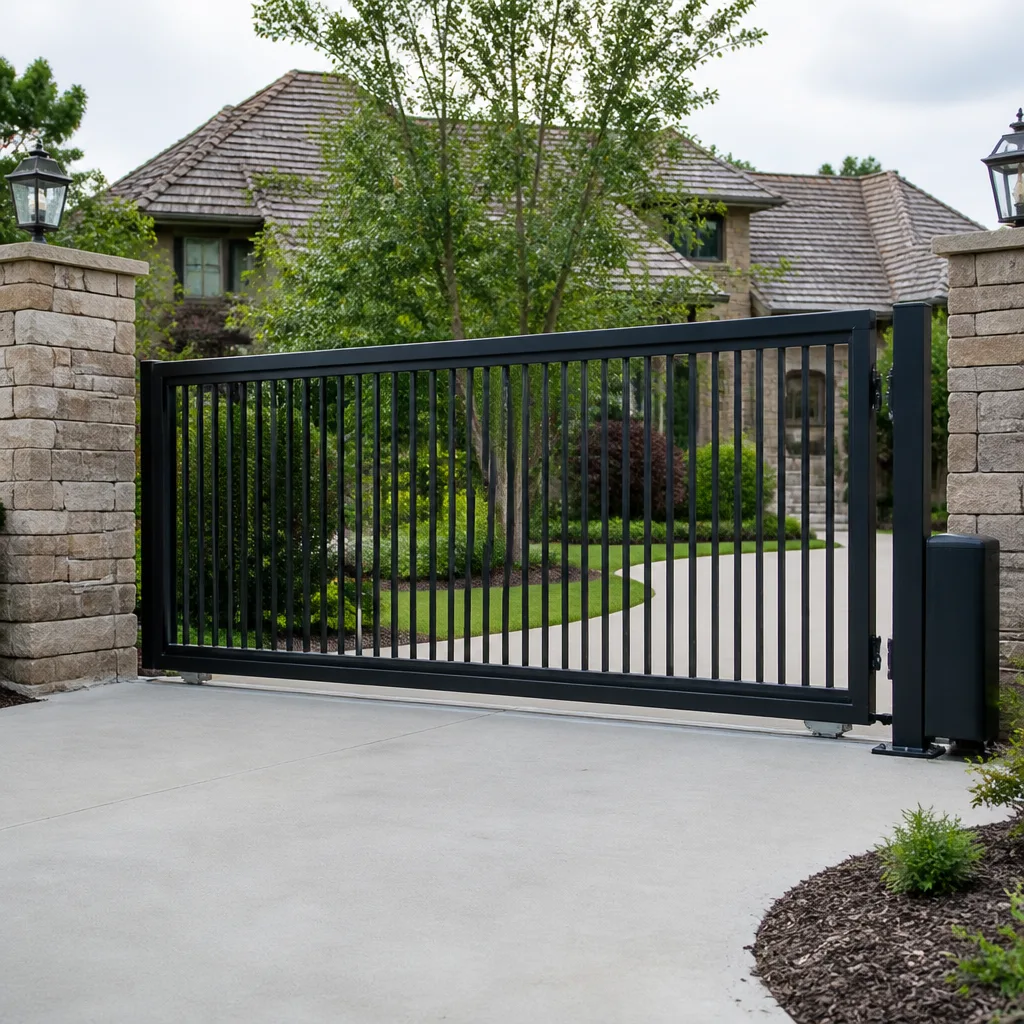 Sliding driveway gates
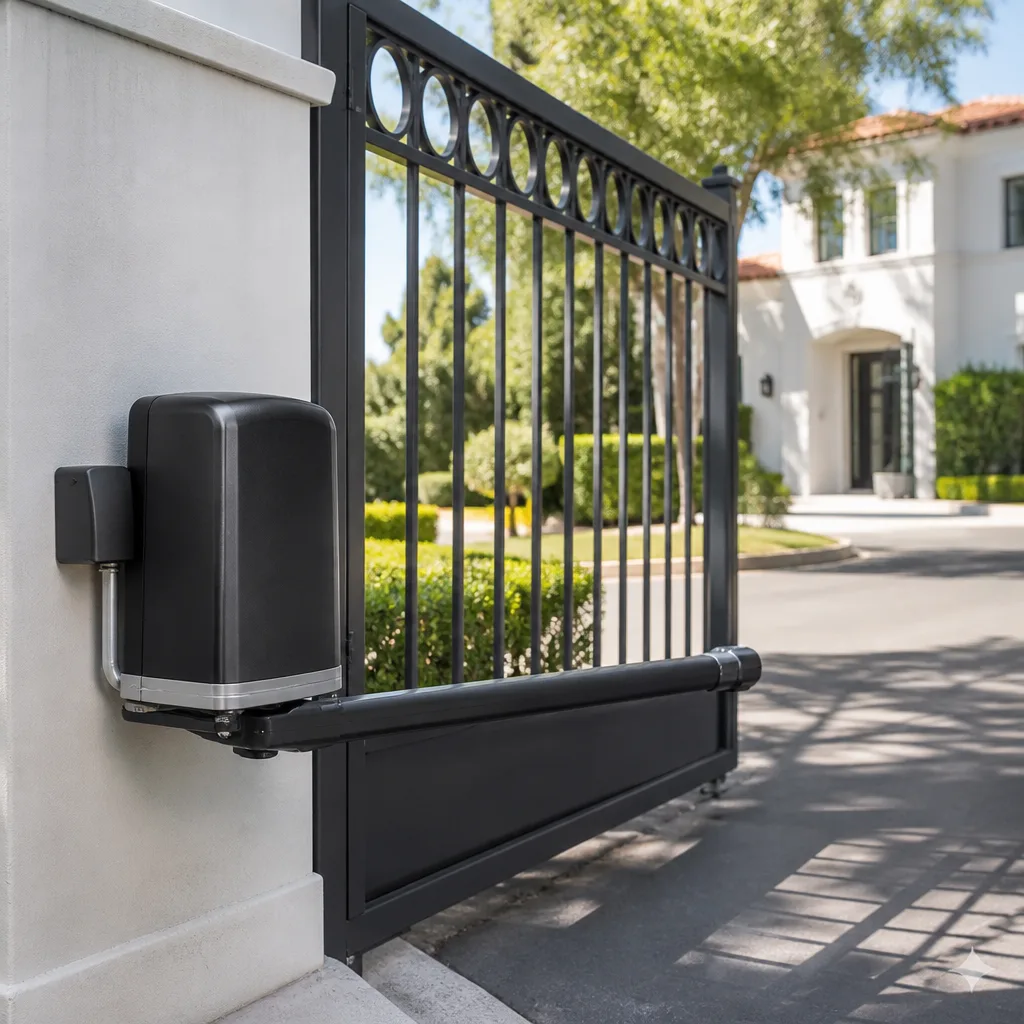 LiftMaster operators
Free on-site gate assessment - hinges, posts, and your LiftMaster or Nice gate operator checked before anything is quoted
The assessment is free and the quote is the invoice.
Get your free estimateGate Repair Maintenance Checklist for Montecito Heights Homeowners
Most Montecito Heights homeowners are spraying the wrong product on their gate rollers, and it’s quietly destroying their hardware. WD-40 is a solvent, not a lubricant. When it hits the nylon wheels on a LiftMaster or Ghost Controls opener, it breaks down the grease packed inside the bearing. The wheel spins dry for a few weeks, then seizes, and the gate starts dragging against the track. This single mistake accounts for a surprising number of the emergency calls we respond to across Montecito Heights. This guide covers the maintenance routine that actually matches the gates, terrain, and weather patterns we see here, in the order that catches problems before they strand your car in the driveway.
Styles & brands we work with
- Wrought iron
- Wood & steel frame
- Farm & ranch
- Sliding driveway gates
- LiftMaster operators
Quick Answer
A practical gate maintenance checklist for Montecito Heights homeowners includes monthly cleaning and obstruction sensor tests, quarterly lubrication with the correct grease per brand, and an annual post-plumb and alignment check. For issues beyond routine care, our Gate Repair services can handle more complex problems. The three failure points that cause most emergency calls are dry roller bearings, misaligned safety sensors, and creeping gate posts on sloped lots. Catching these early prevents most breakdowns.
Table of Contents
- Monthly Maintenance Checklist (15 Minutes)
- Quarterly Maintenance: Lubrication and Sensor Testing
- Annual Maintenance: The Hillside Post-Plumb Check
- Brand-Specific Lubrication: LiftMaster, Viking, and DoorKing
- Testing Obstruction Reversal and Entrapment Protection
- The Documentation Habit That Cuts Repair Costs
- Common Mistakes to Avoid
- When to Call a Professional
- Frequently Asked Questions
- The Bottom Line
Monthly Maintenance Checklist (15 Minutes)
A monthly gate inspection in Montecito Heights should take less than fifteen minutes, and it’s the single most effective habit for avoiding a no-open morning. Start with the gate in the closed position and work outward. The goal is to spot changes, not to fix everything on the spot. Most problems announce themselves with new noises, slower movement, or visible wear long before they become full failures.
Here’s the exact monthly sequence we recommend for homeowners, in the order that matters:
- Watch one full open-and-close cycle from start to finish. Stand where you can see the gate, the track, and the operator arm. Listen for new grinding, clicking, or hesitation. A gate that pauses for half a second before reversing often has a sensor alignment issue, not a motor problem.
- Clear the track and the gate path. In Montecito Heights, leaves, eucalyptus bark, and loose gravel find their way into gate tracks within days of a wind event. Debris forces the gate to work harder and accelerates roller wear. Sweep or blow out the track along its full length. This single step prevents many “weak motor” calls that are actually just dirty tracks.
- Check the gate wheels and rollers by hand. Grab each wheel and try to move it side to side. More than about 1/8 inch of play means the bearing is starting to go. Jiggle the gate itself. A properly hung gate should not rattle noticeably.
- Inspect exposed wiring for chew marks and sun damage. Rodents and prolonged UV exposure are both realities in this part of California. Focus on the wire run from the operator to any keypad or sensor at the driveway. Exposed copper or cracked insulation needs attention before it shorts the control board.
- Confirm the keypad and remote work from inside and outside the property. Test each access point at least once a month. A failing keypad membrane or a dying remote battery is a five-minute fix during a routine check and a serious frustration at 7 a.m. on a Monday.
We tell every Montecito Heights client the same thing: the monthly check is about awareness. You’re building a mental baseline of how the gate sounds and moves normally. When something shifts, you’ll notice it weeks earlier than a homeowner who never looks at their gate.
For residents who want a deeper understanding of what a specialist looks for during a service visit, our Gate Repair in Montecito Heights page walks through the diagnostic process.
Quarterly Maintenance: Lubrication and Sensor Testing
Every three months, the maintenance focus shifts from observation to action. Two jobs matter here: lubrication and sensor testing. Both are tied to the specific hardware on the gate, not to a generic calendar reminder. The biggest mistake we see is over-lubricating with the wrong product, which creates a sticky paste that attracts dirt and accelerates wear.
Use a white lithium grease or a silicone-based product formulated for gate hardware. Never use liquid penetrants, household oils, or anything that sprays thin and runs. Here’s the quarterly sequence:
- Lubricate the rollers, hinges, and pivot points. Apply a small amount of white lithium grease directly to the wheel bearings and the hinge pins. A light coating is enough. You want the grease in the joint, not on the track surface.
- Wipe down the track after lubricating. Grease on the track collects dust and grit from the Montecito Heights air, which grinds down the wheels faster. Run the gate twice after greasing, then wipe away any product that squeezed out.
- Check the operator arm and chain or belt. For chain-drive openers, a light spray of a dedicated chain lubricant, not grease, keeps the links moving quietly. Belt drives typically don’t need lubrication, but do inspect for cracking or fraying.
- Test the obstruction safety sensor. Place a solid object, a trash can or a piece of lumber, in the gate’s closing path. The gate should reverse immediately on contact or before contact, depending on the sensor type. If it doesn’t, stop using the automatic function and call a technician.
- Check the gate’s stopping positions. The gate should stop in the same spot every cycle. A change in stopping position means the limit switches are drifting or the gearbox is developing slop.
Quarterly maintenance is also when Montecito Heights homeowners should realistically assess whether the gate’s hardware is still sized correctly for its usage. A gate that opens 40 times a day has different wear characteristics than one that cycles four times a day.
Annual Maintenance: The Hillside Post-Plumb Check
Montecito Heights is built on slopes, and slopes move. The soil here expands and contracts with the rainy season and the long dry stretch that follows. Over time, gate posts that were perfectly plumb at installation start to lean. A lean of just half a degree changes the gate’s swing or slide geometry enough to bind the latch, strain the operator motor, and wear hinges unevenly.
Once a year, ideally in the late fall before heavier rains arrive, perform this check:
- Place a 4-foot or 6-foot level against each gate post. Check both the front face and the side face. Any gap between the level and the post of more than 1/4 inch over the length indicates movement.
- Measure the gap between the gate and the post at the top, middle, and bottom. The gap should be consistent. A gate that’s tighter at the top than the bottom is hanging on a post that’s begun to lean outward.
- Open the gate fully and leave it. If the gate drifts closed on its own, the post or the hinge block has shifted. A gate that won’t stay open is a safety hazard and a sign the operator is fighting gravity.
- Check the concrete around the post base. Hairline cracks in the pad or the surrounding walkway indicate the post footing is under stress. Small cracks can be monitored. Cracks wider than a credit card need a professional evaluation.
- Inspect the operator arm mounting bracket. A misaligned post puts side-load on the operator arm. Look for wallowed-out bolt holes, a visible angle change at the mounting plate, or new looseness in the connection.
If the post checks out, the annual inspection should also include a thorough review of all electrical connections. Turn off power to the operator and remove the cover. Look for corrosion, heat discoloration, or loose terminals. In Montecito Heights, where coastal air can drift inland depending on the season, corrosion on control board connections is more common than homeowners expect. Tightening a few screws and cleaning oxidation off terminals prevents intermittent failures that are difficult to diagnose later.
For a more detailed look at the electrical side of gate systems, see our Electric Gate Repair in Montecito Heights page, which covers control boards, motors, and wiring in depth.
Brand-Specific Lubrication: LiftMaster, Viking, and DoorKing
Different gate operators have different service requirements. The three brands we see most often on Montecito Heights properties are LiftMaster, Viking, and DoorKing. Each has specific lubrication points and intervals that homeowners should know, because following the manufacturer’s schedule is the difference between a ten-year operator and a four-year one.
LiftMaster operators, especially the LA400 and LA500 series swing-arm models, have a grease point on the threaded rod inside the arm itself. The arm extends and retracts on a worm gear. That gear needs a light film of white lithium grease every six months. The external hinges and the arm pivot should get the same treatment quarterly. LiftMaster limit cams on older models also benefit from a tiny dab of dielectric grease on the switch contact points, which prevents micro-arcing that eventually spooks the logic board.
Viking gate openers, common on the heavier custom gates in Montecito Heights, run on gearboxes that are partially sealed. The sealed unit holds its lubrication, but the output shaft where it meets the gate arm is exposed. That point needs grease every quarter. Viking chain-drive units also need chain tension checked twice a year. A loose chain skips teeth on the drive sprocket and sends a shock load through the gearbox that shortens its life. The chain should deflect about 1/4 to 1/2 inch under moderate finger pressure.
DoorKing operators, including the 9150 and 9200 slide-gate models, are built for commercial-level cycling and are surprisingly tolerant of neglect, but they’re not indestructible. The drive rail and the trucks on a DoorKing slide gate need to be kept clean and lightly greased. More important is the clutch adjustment, which should be checked annually. A clutch that’s too tight puts the full motor torque into the gate during an obstruction, which is dangerous. A clutch that’s too loose won’t move the gate on a cold morning. Neither adjustment is intuitive, and we recommend having a technician handle both.
If your Montecito Heights gate runs a different brand entirely, Lighthouse Gate Repair home covers the full scope of systems we service, including Mighty Mule, Ghost Controls, Elite, BFT, and FAAC.
Testing Obstruction Reversal and Entrapment Protection
Since the UL 325 standard became law for automatic gate operators, every residential gate in Montecito Heights is required to have two independent means of entrapment protection: a primary obstruction sensor that reverses the gate, and a secondary device, either photo eyes or a contact edge, that also triggers reversal. These systems exist for a reason. A 700-pound sliding gate has enough force to seriously injure a person or a pet.
Testing both protection systems takes ten minutes and should be part of your quarterly routine. Here’s how to do it correctly:
- Test the photo eyes first. With the gate open, block the photo eye beam with your hand or a solid object. Activate the gate to close. It should not move at all. If the gate moves even an inch with the beam blocked, the photo eyes are misaligned or non-functional.
- Test the contact edge or reversal sensor second. Let the gate begin closing and then place a firm object, a piece of lumber or a heavy trash can, directly in the closing path so the gate contacts it. The gate should reverse within two seconds of contact.
- Test the gate’s force setting. While the gate is closing, push gently against the leading edge with your hand. You should be able to stop the gate without much effort. A gate that keeps pushing against your hand has the force limiter set too high.
- Record the results. Write down the date and whether each test passed. If either the photo eyes or the contact edge fails to stop and reverse the gate, disable the automatic function at the operator and call a technician.
The legal angle matters here. A property owner who knows, or should know, that a gate’s entrapment protections are not working bears the liability if someone is injured. Testing and documenting your tests is the only way to establish that you maintained the system responsibly. In practice, a photo eye that’s been knocked out of alignment by a landscaper’s blower or a kid’s bicycle is the single most common reason a gate refuses to close in Montecito Heights. It’s also the easiest fix, once you know to look for it.
If the tests reveal a problem, don’t delay. A malfunctioning safety system is the one repair category where we tell homeowners to stop using the gate entirely until it’s addressed. Our electric gate repair team responds to exactly this situation year-round.
The Documentation Habit That Cuts Repair Costs
Photograph your gate four times a year. That single habit saves Montecito Heights homeowners real money when something fails. Here’s why it works: when a gate starts acting strangely, the technician arrives seeing only the current state. Without a reference point, they have to diagnose from scratch, and that takes time. With a photo history, they can see exactly when the post started leaning, when the roller gap appeared, or when the operator arm angle changed.
The photo set takes one minute. Stand in the same spot each time and capture:
- A full-view shot of the gate in the closed position, showing the gap at the top, middle, and bottom of the closing stile.
- A close-up of each hinge or roller. This is where wear appears first. Compare photos from six months ago and the difference is obvious.
- A shot of the operator arm where it connects to both the gate and the mounting post.
- A shot of the track or the ground rail if you have a slide gate, showing any visible sag or obstruction.
- A shot from the driveway looking back at the gate in the open position.
Email the photos to yourself with the season in the subject line, or keep them in a dedicated folder on your phone. When something changes, you’ll be able to show the technician “this is what it looked like in June” instead of trying to describe it from memory. This straightforward habit routinely makes the difference between a 45-minute diagnosis and a two-hour one, because the change pattern often points directly at the component that failed.
For homeowners who suspect their gate needs more than routine attention, our Gate Installation in Montecito Heights page explains how we assess whether a repair is worth the investment or a replacement makes better long-term sense.
Common Mistakes to Avoid
- Using WD-40 or a liquid penetrant on gate rollers. These products strip the existing grease from nylon-wheel bearings, and the dry wheel fails within weeks. Use white lithium grease instead.
- Ignoring a gate that’s been closing slower for months before it stops entirely. Slow close is the earliest warning sign of a failing capacitor, a dragging wheel, or a post that’s begun to shift. The time to fix it is before the gate jams open or closed.
- Adjusting the force limiter to “fix” a gate that’s reversing or stopping short. Cranked-up force settings override the safety systems and put the operator motor under continuous load. The real problem is usually a mechanical bind or a sensor fault, not a gate that needs more muscle.
- Waiting for the rainy season to test the gate. A gate that fails during a Montecito Heights rainstorm strands you at the worst possible moment. Test everything in the dry months when the fix is easy.
- Treating the gate as a set-and-forget appliance. A gate is a mechanical system with moving parts, exposed wiring, and a motor. It needs the same annual attention you’d give an HVAC system or a roof.
- Assuming a Gate that works “well enough” doesn’t need safety testing. Photo eyes misalign gradually. The gate still opens and closes. The first time you discover the sensor is dead is the moment it fails to stop for someone in the path.
When to Call a Professional
Routine maintenance is homeowner territory, but several symptoms require a technician with specialized diagnostic equipment and experience across multiple gate brands. For Gate Repair Troubleshooting: Common Problems and How to Fix Them, see our detailed guide. Call when the gate trips a breaker repeatedly, which indicates a short in the wiring or a failing motor. Call when the operator hums but doesn’t move the gate, a classic capacitor or gearbox failure. Call when the gate reverses without an obstruction, which usually points to a failing sensor circuit or a control board fault. Call when you notice the post has visibly shifted, since correcting a leaning post often requires resetting the footing. And call when any safety test fails. A gate that can’t be made safe is a gate that shouldn’t run. Lighthouse Gate Repair offers free estimates in Montecito Heights, call (866) 569-5320.
Frequently Asked Questions
Monthly for a visual inspection and track cleaning, quarterly for lubrication and sensor testing, and annually for the full post-plumb, electrical, and hardware check. This schedule matches the wear patterns we see on Montecito Heights gates and catches most failures before they happen.
White lithium grease for rollers, hinges, and pivot points. A dedicated chain lubricant for chain-drive openers. Silicone spray for keypad buttons and weather seals. Nothing else, and never a solvent like WD-40. Specific brands like LiftMaster, Viking, and DoorKing each have additional points that need attention on their own schedules.
You can, but you probably shouldn’t. The adjustment screws and dip switches on a control board interact in ways that are easy to set wrong. A too-high force setting creates a safety hazard. A wrong travel-limit setting can drive the gate past its mechanical stop and bend the operator arm. This is one adjustment set we recommend leaving to a gate specialist.
Intermittent gate operation in Montecito Heights is usually one of three things: a photo eye that’s barely aligned and gets knocked out by temperature shifts, a control board with a cracked solder joint that opens and closes with heat, or a remote or keypad with a dying battery. The pattern of failure, when it happens, and what fixes it temporarily, tells the technician which one you’re dealing with.
Most automatic gate operators have a manual release mechanism, usually a keyed lock on the operator or a pull-handle near the arm, that disengages the motor so you can move the gate by hand. If your gate’s manual release is missing, seized, or the key doesn’t match, it’s worth getting that fixed before the next outage. If the operator resets and keeps failing, call us at (866) 569-5320 for a diagnosis.
Leaving the gate open does not wear the motor or the operator. The components that age while the gate sits open are the ones exposed to the environment: the control board baking in the operator box heat, and the photo eyes collecting dust and debris. In Montecito Heights, prolonged open time also invites unwanted visitors, so the security tradeoff is usually more compelling than the mechanical one.
The Bottom Line
A gate in Montecito Heights fails for a handful of predictable reasons: dry rollers, misaligned sensors, leaning posts, corroded connections, and ignored warning signs. The maintenance checklist above addresses each of them in the order they actually occur. Fifteen minutes a month, thirty minutes a quarter, and a focused hour once a year keeps most gates running for a decade or more. Add the photo documentation habit and you’ll cut repair costs even when something does break. A gate is a mechanical system, not an appliance. Treat it like one.
Written by the team at Lighthouse Gate Repair, serving Montecito Heights since 2018. Explore more guides & resources on gate care and repair.
See the difference
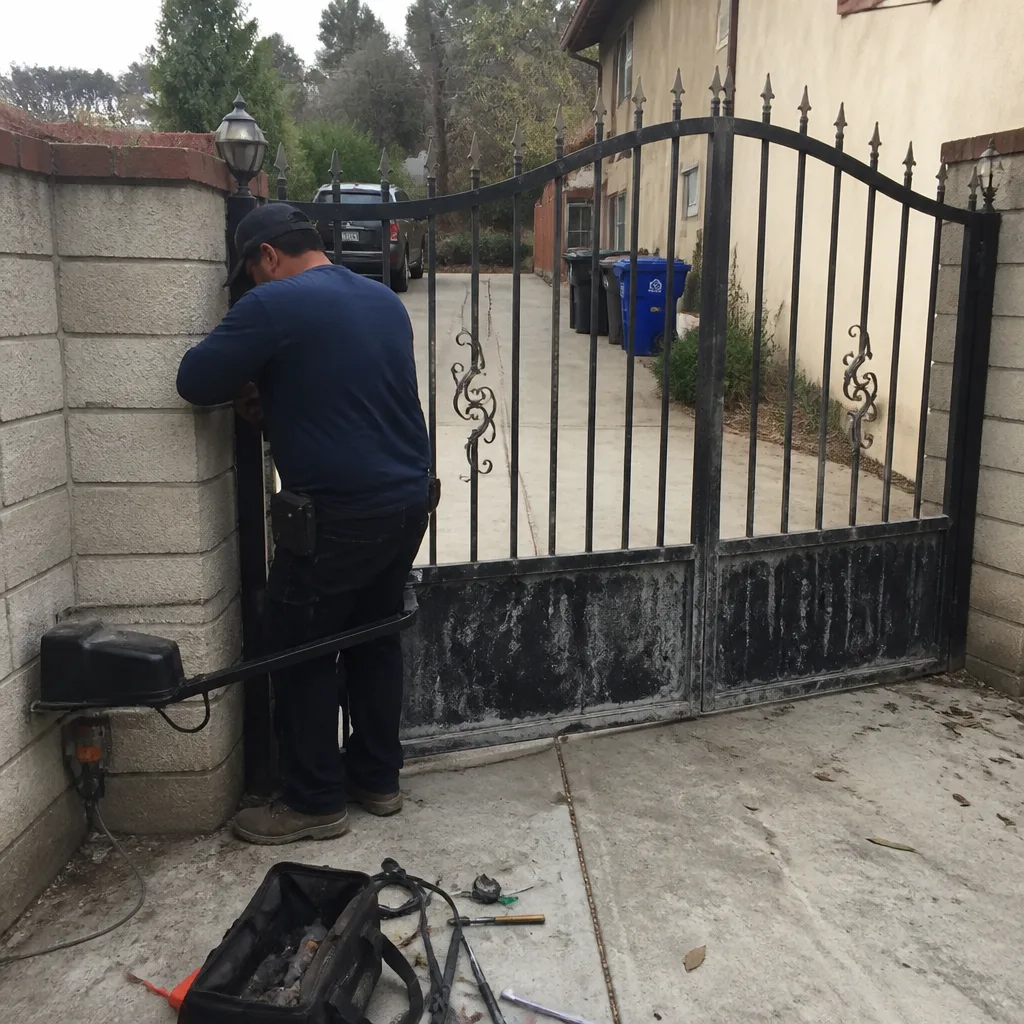 Before
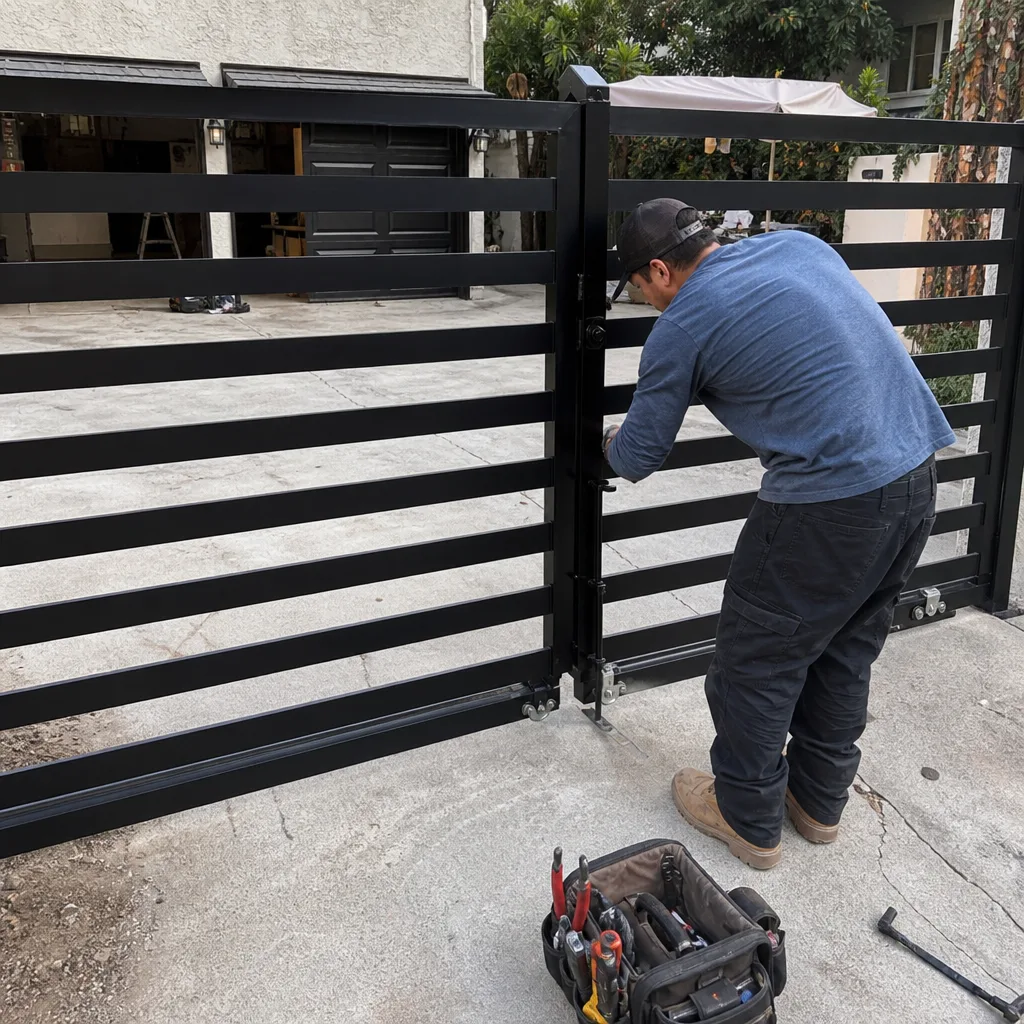 After
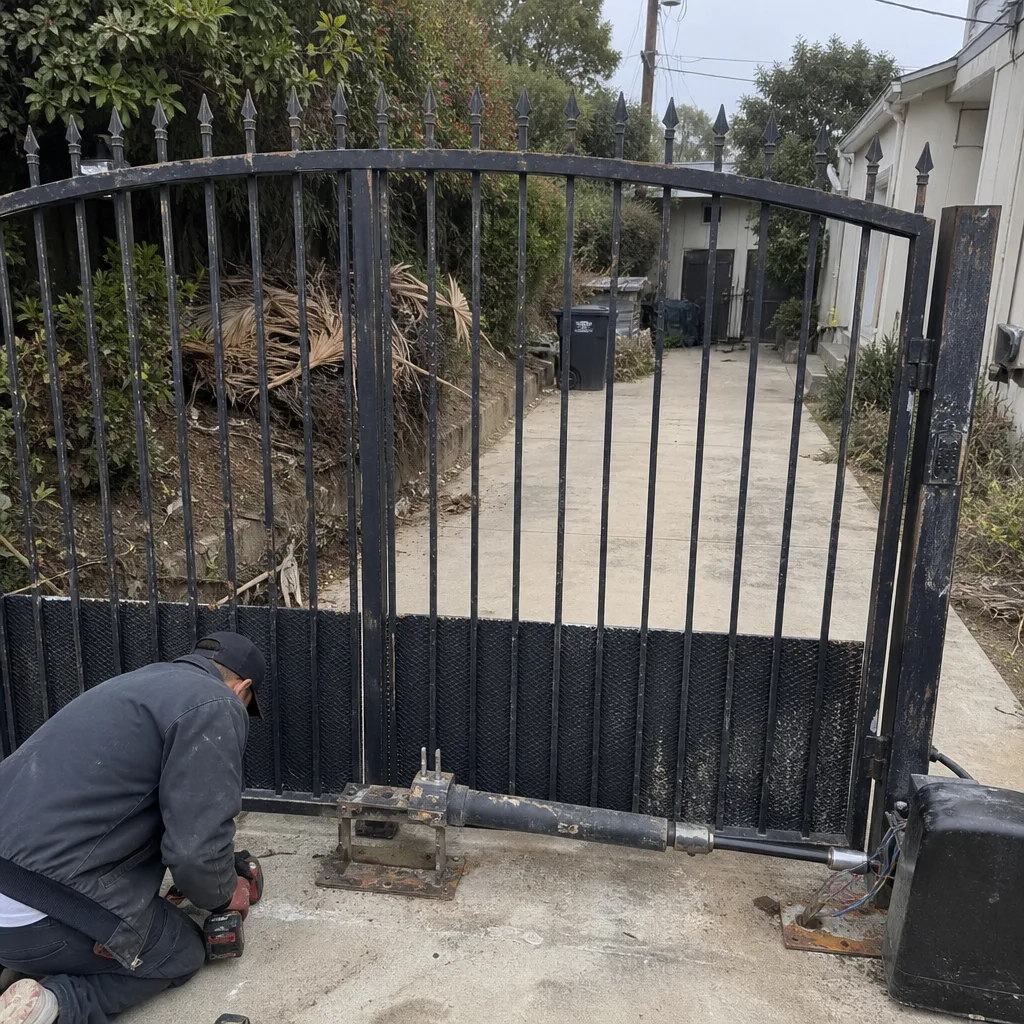 Before
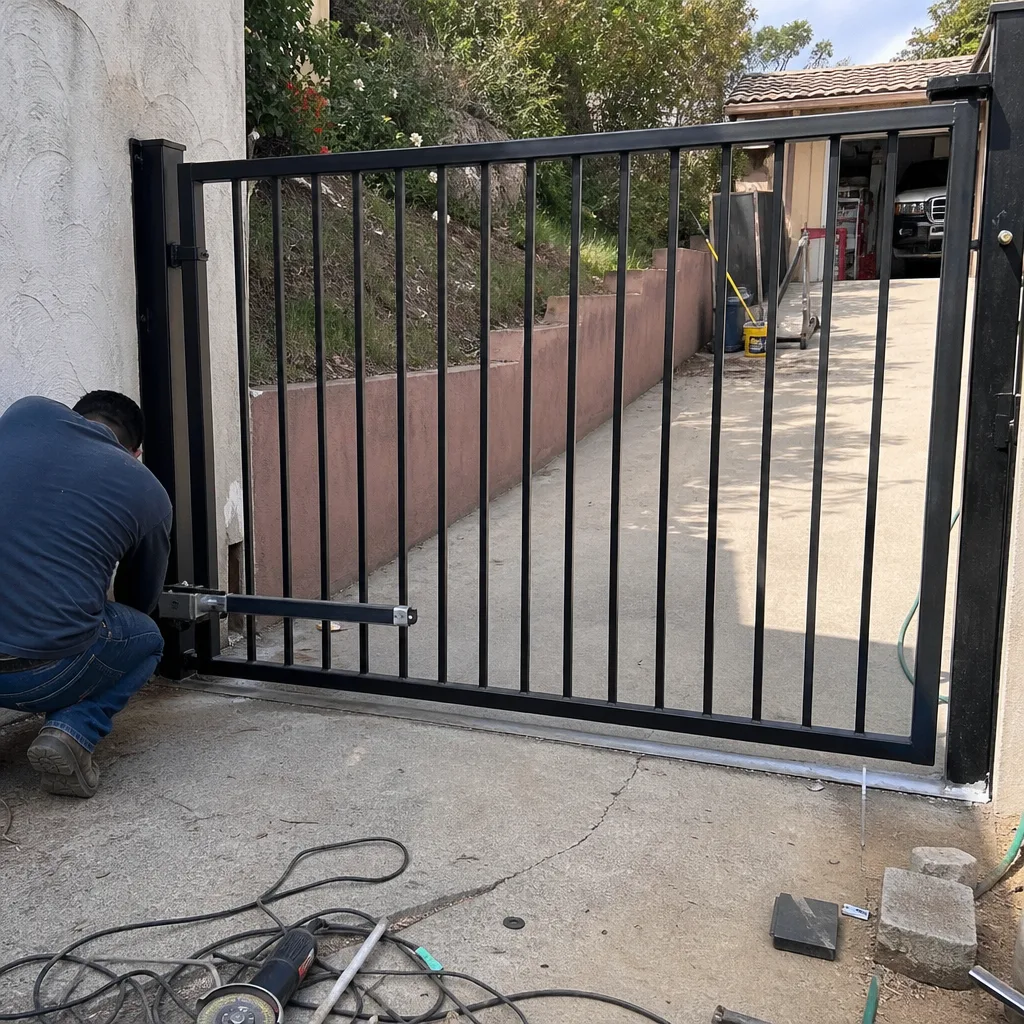 After
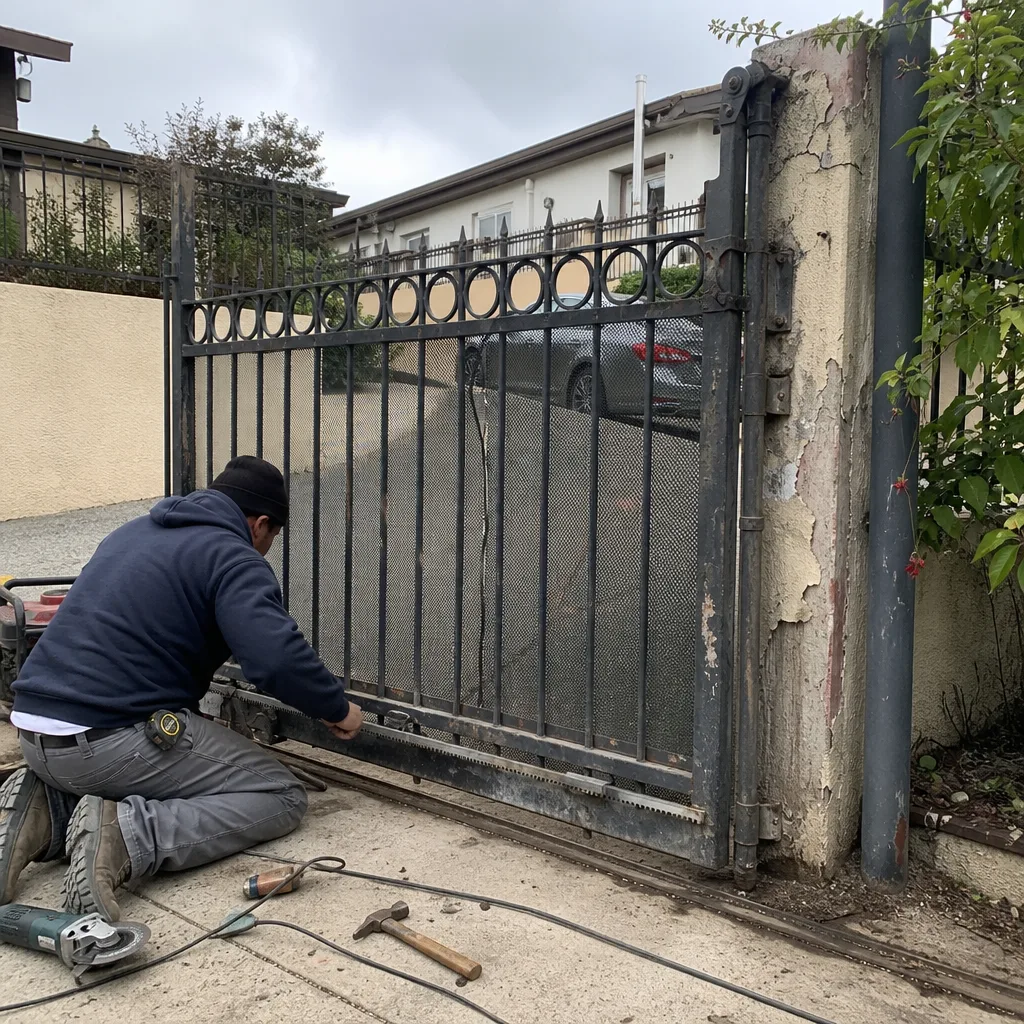 Before
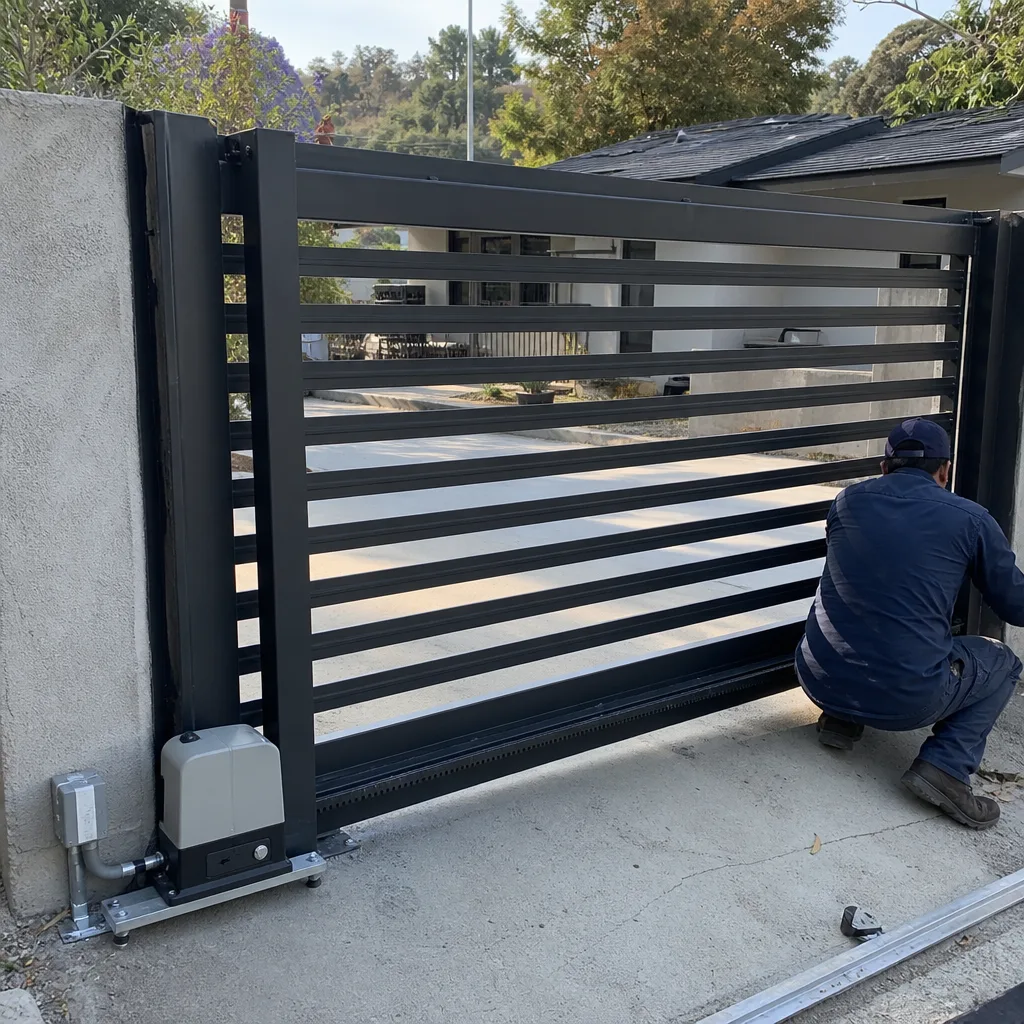 After