
Last updated November 2, 2026
 Wrought iron
 Wood & steel frame
 Farm & ranch
 Sliding driveway gates
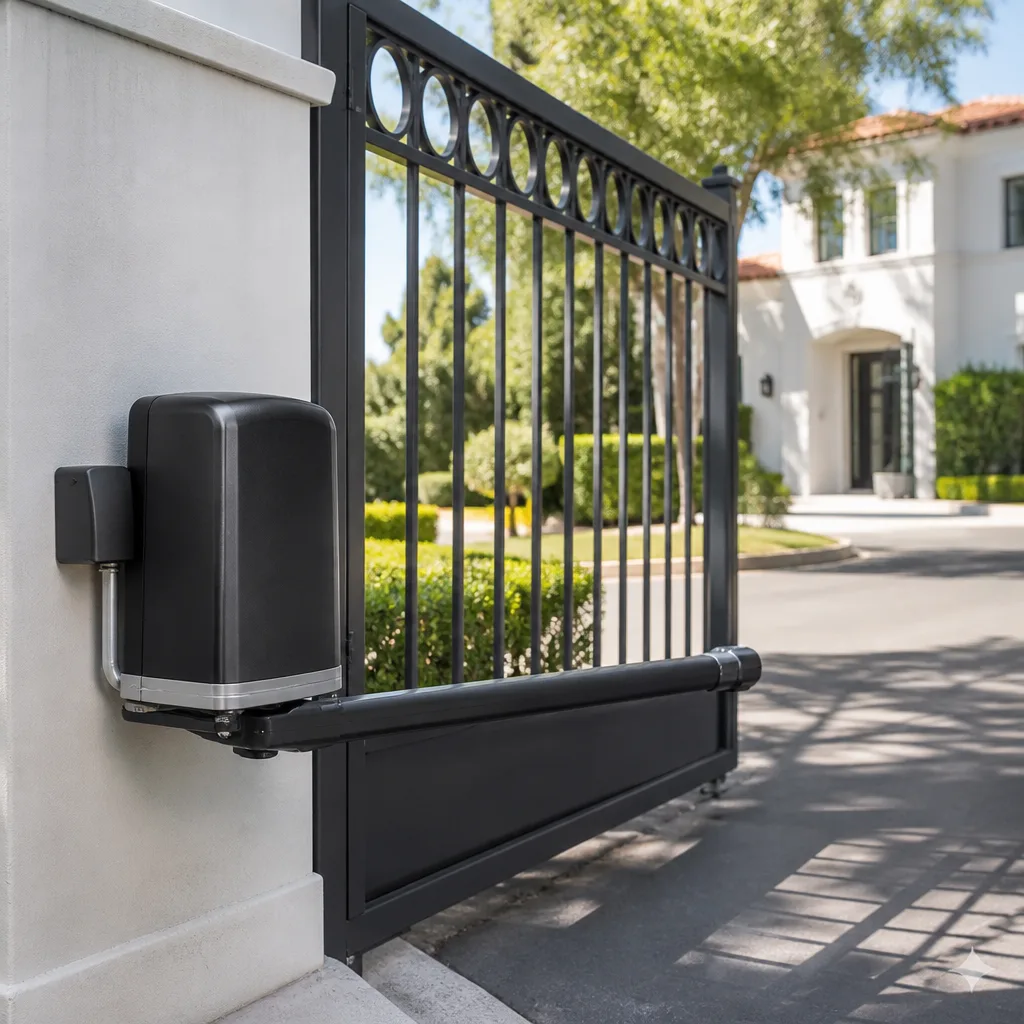 LiftMaster operators
Free on-site gate assessment - hinges, posts, and your LiftMaster or Nice gate operator checked before anything is quoted
The assessment is free and the quote is the invoice.
Get your free estimateGate Repair Permits, Codes & Inspections in CA: What You Need to Know
A gate that injures someone on your property, a child, a delivery driver, triggers immediate scrutiny of your installer’s work. If the entrapment protection wasn’t installed to UL 325 standard, your homeowner’s insurance has grounds to deny the claim. That single sentence is why this guide exists. We’re writing it from Montecito Heights, where hillside properties, long driveways, and automated gates intersect with some of the strictest building and electrical codes in the country. For Gate Repair Warning Signs: A Montecito Heights Homeowner’s Reference Guide, see our local resource. By the time you finish reading, you’ll know exactly when a permit is required, what UL 325 actually demands, what a California gate inspector looks for, and how to document compliance on a gate that was installed years ago without any paperwork.
Styles & brands we work with
- Wrought iron
- Wood & steel frame
- Farm & ranch
- Sliding driveway gates
- LiftMaster operators
Quick Answer
In California, most gate repairs, a hinge replacement, a wheel swap, a sensor realignment, do not require a permit. But installing a new gate operator (the motor), running new electrical to the gate, or replacing structural posts almost always does. The governing safety standard is UL 325, which mandates specific entrapment protection on every automated gate, and compliance with it is not optional regardless of whether a permit was pulled.
Table of Contents
- When a Permit Is Required vs. When It Isn’t
- UL 325 Explained in Plain Language
- The HOA Layer: Approval on Top of City Code
- What a Code-Compliant Gate Inspection Actually Checks
- Retroactive Compliance: Documenting a Gate Installed Without Permits
- What Permits and Inspections Cost in LA County
- Common Mistakes to Avoid
- When to Call a Professional
- Frequently Asked Questions
- The Bottom Line
When a Permit Is Required vs. When It Isn’t
The line between a repair and an installation is where most Montecito Heights homeowners get tripped up. The California Building Code (CBC) and California Electrical Code (CEC) draw the threshold based on what is being changed, not on how much the job costs. A $4,000 repair that replaces a broken hinge and rewinds a torsion spring might need no permit. A $400 job that hardwires a new keypad to a motor might.
Here is the practical breakdown based on the work we see in the field around Los Angeles County:
Work that generally does NOT require a permit
- Replacing a worn hinge, roller, or wheel on an existing sliding or swing gate
- Adjusting gate travel limits, force settings, or closing speed on an existing operator
- Replacing a remote control, keypad, or loop detector that connects to an existing low-voltage circuit
- Lubricating, tightening, or realigning an existing gate leaf on its current posts
- Replacing a photocell sensor with a like-for-like unit on an existing compliant system
- Replacing a battery in a solar-powered operator like a Ghost Controls or Mighty Mule unit
Work that DOES require a permit
- Installing a new gate operator (motor) that requires a new electrical circuit or hardwired connection
- Adding a new 120V branch circuit from the main panel to the gate location
- Replacing or setting new structural gate posts in concrete
- Installing a brand-new gate where none previously existed
- Widening an existing gate opening, which changes the structural load and post footings
- Adding or modifying vehicle loop detectors that are cut into the driveway asphalt or concrete
The threshold that surprises people is the operator rule. A new LiftMaster or BFT swing arm motor that plugs into an existing outdoor GFCI outlet may technically fall under a “minor repair” if the outlet was already there and already permitted. But if that outlet doesn’t exist and an electrician has to run a new circuit, you need an electrical permit. In LA County unincorporated areas, including parts of Montecito Heights, the Department of Building and Safety treats any new hardwired gate operator installation as an electrical project requiring a permit. We always recommend calling the building department with the specific scope before any work starts. The five-minute call saves more grief than any other step in this process. Our Lighthouse Gate Repair home page covers the full scope of gate work we handle where this question matters most.
UL 325 Explained in Plain Language
UL 325 is not a government regulation. It’s an Underwriters Laboratories safety standard for automated gate operators. But California incorporates it by reference into the building code, which means it functions as law. If your gate operator does not meet UL 325, it is not code-compliant, even if a permit was never required for the installation.
The standard exists because automated gates kill and injure people. The Consumer Product Safety Commission has documented deaths involving gate entrapment, most often children pinned between a moving gate leaf and a fixed post or wall. UL 325 was written in response to those incidents, and the current version (UL 325, 7th edition, effective since 2018) is the baseline every installer in California is legally bound to follow.
What entrapment protection zones are
UL 325 defines entrapment protection zones as the physical spaces where a person can be caught by a moving gate. Different gate types have different zone counts:
- Sliding gate: up to 7 entrapment zones, including the leading edge, trailing edge, and along the fence line where the gate travels
- Swing gate: up to 4 zones, concentrated at the hinge, latch, and the two pinch points where the gate meets the post
- Vertical pivot gate: 4 zones, including the bottom edge where the gate sweeps
- Vertical lift gate: 4 zones, including the pinch point at the bottom bar
The reason residential operators commonly fail is that many homeowners install a unit themselves, or have a handyman do it, and only wire one safety device. A typical Mighty Mule or Ghost Controls DIY kit includes one or two photocells. A code-compliant UL 325 installation requires protection at every zone. On a sliding gate, that means the leading edge needs a monitored contact edge or a non-contact sensor, the trailing edge needs protection so a person can’t be dragged, and the area where the gate passes the fence needs a sensor to prevent pinch-and-crush. Most residential DIY jobs cover only the leading edge. That is a compliance failure, and it’s the failure that comes up in insurance investigations after an injury. For help diagnosing issues, see Gate Repair Troubleshooting: Common Problems and How to Fix Them.
Monitored vs. unmonitored devices
UL 325 distinguishes between monitored and unmonitored entrapment protection. A monitored device sends a continuous supervisory signal to the control board. If the sensor fails, the board knows and will refuse to operate the gate in automatic mode. An unmonitored device has no such signal. You could have a dead photocell and the gate would keep closing on someone. Since the 7th edition, certain zones on certain gate types require monitored protection. Older systems, especially those installed before 2018, often use unmonitored edges and sensors. If you’re repairing an older gate in Montecito Heights, bringing it up to current UL 325 may mean upgrading the control board and the safety edges together. We see this frequently with older Linear and Viking operators on hillside properties.
Why the seven zones matter in practice
You don’t need to memorize the seven zones for a sliding gate. You need to know that any space where a body part can be caught between a moving gate and a stationary object requires protection. An inspector will walk the gate through its full travel and look at every pinch point. If they find even one unprotected zone, the gate fails inspection. That’s not a judgment call, it’s a checkbox. On electric gate repair in Montecito Heights, we regularly find gates that have been “working fine for years” but lack trailing-edge protection or have a bypassed loop detector. Working fine and code-compliant are different standards.
The HOA Layer: Approval on Top of City Code
Montecito Heights sits near communities governed by homeowners associations, and many homes with gated driveways fall under HOA architectural review. The HOA layer exists on top of, not instead of, city code. City permits cover safety, structural integrity, and electrical compliance. HOA approval covers appearance, materials, and consistency with the neighborhood’s covenants, conditions, and restrictions (CC&Rs).
The mistake we see in our service area is treating HOA approval as if it were the only approval needed. A homeowner gets their HOA board to sign off on a new wrought-iron sliding gate, installs it, and then finds out during a home sale that the gate operator was never permitted by the city. The HOA’s approval does not satisfy the LA County building department, and the city’s permit does not satisfy the HOA. You need both.
How to get written HOA approval that protects you
- Pull your CC&Rs and find the architectural review section. Most HOAs require a written application with drawings, material samples, and a description of the operator type.
- Submit the application before ordering any materials. Gate styles, colors, and even operator brands can be restricted in some communities. A BFT swing arm operator may be approved while a Viking hydraulic operator is not, purely on aesthetic grounds.
- Get the approval in writing, signed, with a date. A verbal “go ahead” from a board member is worthless if the board later changes its mind or the member moves away.
- Keep the approval with your home records. When you sell, the buyer’s title company will ask about any improvements to the property. The HOA approval and the city permit are the two documents that prove the gate is legitimate.
- If your CC&Rs are silent on gates, apply anyway. Most HOAs have a general architectural control clause that covers any exterior modification. A gate with a motor is absolutely an exterior modification.
If you inherited a gate that was installed by a previous owner with no HOA paperwork, contact the management company and ask for a retroactive approval. HOAs are generally receptive because a non-compliant gate is as much a liability for them as it is for you.
What a Code-Compliant Gate Inspection Actually Checks
If your gate installation needed a permit, the final sign-off requires an inspection by a city or county building inspector. Knowing what the inspector checks will save you from failing on a technicality. Here is the checklist in the order most inspectors walk through it:
- Electrical rough-in. If new conduit was run underground from the house to the gate, the inspector checks the trench depth (18 inches minimum for PVC conduit under non-vehicular areas, 24 inches under driveways), the conductors, and the GFCI protection. This happens before the trench is backfilled.
- Operator listing and labeling. The inspector will look for the UL 325 compliance label on the operator. A unit without a UL listing fails immediately, regardless of how well it was installed.
- Entrapment protection at every zone. The inspector runs the gate through a full open and close cycle and physically checks each zone. For a sliding gate, that’s up to seven zones. They will test the photocells, the contact edges, and the loop detectors.
- Force and speed settings. UL 325 requires the gate operator’s closing force to reverse when it encounters a certain resistance. The inspector tests this with a force gauge in some jurisdictions, or manually in others. They’ll also verify the closing speed meets the standard for the gate type.
- Warning signage. UL 325 requires specific warning signs to be posted on both sides of the gate and on the operator. These signs must be legible and permanently mounted. Missing signs are a common fail item.
- Fire department access. In many California jurisdictions, including parts of LA County, automatic gates must include a fire department access mechanism. That could be a Knox key switch, a strobe light sensor, or a siren-activated opener. The inspector will verify whatever mechanism your local fire code requires.
- Structural connections. The inspector verifies that the gate posts are set in concrete at the proper depth and that the operator’s mounting is secure. They’re checking that the gate won’t tip over if the motor fails or if someone climbs on it.
Most inspections take 15 to 30 minutes. The fail items we hear about most from Montecito Heights homeowners are missing warning signage, unprotected secondary zones, and incompatible force settings on older operators that were never updated after a control board replacement.
Retroactive Compliance: Documenting a Gate Installed Without Permits
This is the scenario that prompts the most anxious phone calls: you’re selling your Montecito Heights home, the gate has been there for twelve years, the buyer’s inspector flags it as unpermitted, and now the sale is at risk. Here is the path forward.
First, understand what’s actually being flagged. If the gate itself is a decorative metal gate with no motor and it doesn’t open automatically, it likely needs no permit at all. The issue only arises with automated gates and their operators. If your gate has a motor, the buyer’s inspector is correct to flag it if there’s no permit on record.
The retroactive process, step by step
- Determine what should have been permitted originally. An automated gate installation with a new circuit and new posts typically requires both a building permit and an electrical permit. Retroactive permitting involves filing for both.
- Get an evaluation from a licensed contractor familiar with gate installations. The contractor will check whether the existing installation meets current code, including UL 325. If it doesn’t, you’ll need to bring it into compliance before the city will sign off. On a sliding gate, that often means adding missing contact edges, upgrading the control board to a monitored system, and installing required signage.
- File the retroactive permit with the LA County Department of Building and Safety. You’ll describe the scope of the original installation. The department may charge a penalty on top of the standard permit fee, typically 50% to 100% of the original fee.
- Schedule the inspection. Once the work to bring the gate into compliance is done, the inspector comes out and performs the same inspection described above.
- Get the certificate of occupancy or final approval. Once the gate passes, the city issues the final sign-off. That document, along with any HOA approval, is what the buyer’s title company needs to clear the item.
The cost for retroactive compliance ranges widely. If the gate was installed correctly and the only missing piece is the permit itself, you might spend $500 to $1,500 in fees and inspection costs. If the gate was never compliant, for example a sliding gate with no contact edges and an old Viking board that predates the 2018 standard, correcting it can run $1,500 to $4,000 depending on the number of safety devices and the board upgrade. The home sale context usually makes this a straightforward decision, but it’s better to identify the issue before listing rather than during escrow. If you’re in this situation, gate installation in Montecito Heights gives you a sense of what full code-compliant work involves.
What Permits and Inspections Cost in LA County
Permit costs in Los Angeles County are fees for the review and inspection, not a tax on your gate itself. The specifics vary by jurisdiction, but here are the ranges we work with in and around Montecito Heights:
| Permit or Fee Type | Typical Range in LA County | Notes |
|---|---|---|
| Electrical permit for a new gate operator circuit | $150 – $400 | Based on the number of circuits and the job value |
| Building permit for structural post replacement or new gate | $200 – $600 | Depends on the gate’s square footage and the scope |
| Plan check fee (if required) | $100 – $300 | Usually only for new gate installations with structural work |
| Inspection fee | $100 – $250 per inspection | Some jurisdictions bundle this into the permit |
| Retroactive permit penalty | 50% – 100% of the original permit fee | Applied when work was done without a permit |
| Knox key switch or fire access device | $150 – $500 | Required in some fire districts for automatic gates |
These numbers are the permit costs only. The labor and materials to bring an older gate into UL 325 compliance are separate. If you’re repairing a gate that already has a permit and is already compliant, you typically pay nothing to the city. The permit is only for new installations and significant modifications. This distinction matters: a repair on a compliant gate is not a permitting event.
Common Mistakes to Avoid
- Assuming “repair” means “no permit” without checking the scope. Replacing a hinge is not a permitting event. Replacing the entire gate frame on poured concrete footings usually is. Draw the line at structural and electrical work.
- Installing a DIY gate operator kit without reading the UL 325 requirements. Mighty Mule and Ghost Controls make solid residential operators, but their instruction manuals assume a level of safety knowledge most homeowners don’t have. The number of installations we see in Montecito Heights with no trailing edge protection is not a coincidence.
- Bying a used gate operator from a salvage yard or online marketplace. A 2008 Linear operator may work mechanically, but it likely predates the current UL 325 standard. You can install it, and it will fail inspection if you ever need one, and worse, it won’t protect you in an entrapment incident.
- Treating the HOA approval as optional. In a gated community, the HOA can fine you for a non-approved gate and even require removal at your expense. A $350 architectural review fee is cheap insurance.
- Not documenting the original installation. If you had a gate installed in 2015 and you have the permit and the inspector’s sign-off, keep those papers. When you sell, the buyer will ask. If you can’t produce them, the gate becomes a liability in escrow.
- Running the gate on an extension cord for years “until you get around to it.” We see this on hillside properties where the gate is far from the house. An extension cord is not a code-compliant power supply, and it’s a fire and shock hazard. A permanent underground feed is the only legal method.
- Using a handyman for the electrical portion of a gate installation. In California, any new circuit run requires a licensed electrician. A handyman can hang the gate and mount the operator, but they cannot legally pull the electrical conductor.
When to Call a Professional
You don’t need a professional to replace a battery in a remote or tighten a hinge bolt. You do need one when the work touches any of the following: the operator’s control board, the entrapment protection system, the 120V electrical feed, the structural posts, or the compliance documentation for a home sale. These are the areas where the code has teeth, and where mistakes become injuries or insurance claim denials.
If you’re uncertain whether your existing gate is UL 325 compliant, or if a repair you’re planning requires a permit, a dedicated gate company can evaluate the system and give you a straight answer, usually without charging for the assessment. Lighthouse Gate Repair offers free estimates in Montecito Heights, and we’re happy to walk a property and tell you exactly where the gate stands on permits and safety. Call (866) 569-5320. We work on LiftMaster, FAAC, BFT, Linear, Viking, Ghost Controls, DoorKing, Elite, and Mighty Mule systems, so we’ll assess the gate you already have, not the one someone wants to sell you. For residents outside Montecito Heights, gate repair in Montecito Heights is our primary service page, and we service surrounding neighborhoods from that base.
Frequently Asked Questions
Replacing a gate operator with a like-for-like unit that connects to an existing permitted circuit generally does not require a new permit. If you’re changing the operator type, for example swapping a swing arm for a sliding operator, or if new electrical work is needed, a permit is required. Call (866) 569-5320 and we’ll tell you which category your job falls into.
UL 325 is the safety standard for automated gate operators that California building code incorporates as law. It requires entrapment protection at every zone where a person can be pinned or crushed by the moving gate. Non-compliance voids insurance coverage in entrapment injury cases and fails any building inspection.
You can, but the electrical portion must be done by a licensed electrician, and the final installation must meet UL 325 for entrapment protection. Most DIY installations we inspect in Montecito Heights fail on at least one safety zone, usually the trailing edge on sliding gates. If you want it done once, correctly, the estimate is free.
Gate and electrical permits in LA County typically run between $150 and $600 depending on the scope, plus $100 to $250 for each inspection. Retroactive permits for unpermitted work carry a penalty of 50% to 100% of the original fee. Exact costs depend on your specific jurisdiction and the job details.
The buyer’s inspector will likely flag the unpermitted gate, and the title company may require resolution before closing. The path forward is a retroactive permit, which involves bringing the gate into current code compliance, filing with the county, and passing an inspection. It’s a solvable problem, but it costs more than permitting it correctly the first time.
Repairs that match the existing approved design generally don’t need HOA approval. New gates, gate replacements, and changes to gate style, color, or operator type usually do. The approval must be in writing and is separate from any city or county permit. Call (866) 569-5320 for guidance on what your specific repair will trigger.
The Bottom Line
California’s gate permit and code requirements are not bureaucratic red tape. They’re a safety backstop that protects you from liability, injury, and insurance fallout. The UL 325 standard is the legal baseline for every automated gate, and it applies whether anyone ever pulls a permit. Most repairs don’t trigger permitting, but any new operator installation, new electrical circuit, or structural post work does. The HOA layer adds a second approval track. And if you’re inheriting an unpermitted gate, documenting compliance retroactively is a straightforward process that costs far less than an insurance denial. When in doubt, get a professional assessment before the work starts. For Montecito Heights homeowners, that call is (866) 569-5320.
Written by the team at Lighthouse Gate Repair, serving Montecito Heights since 2018. Explore more guides & resources on our blog.
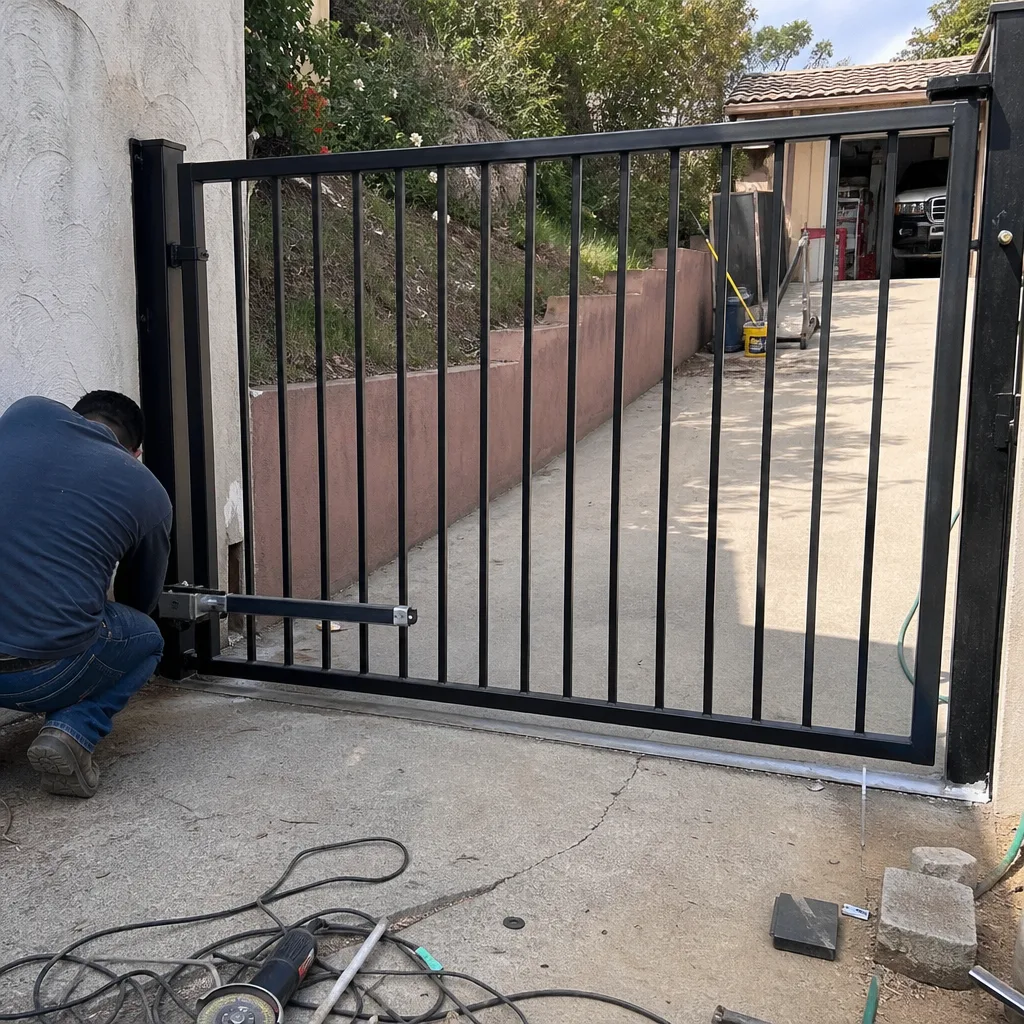
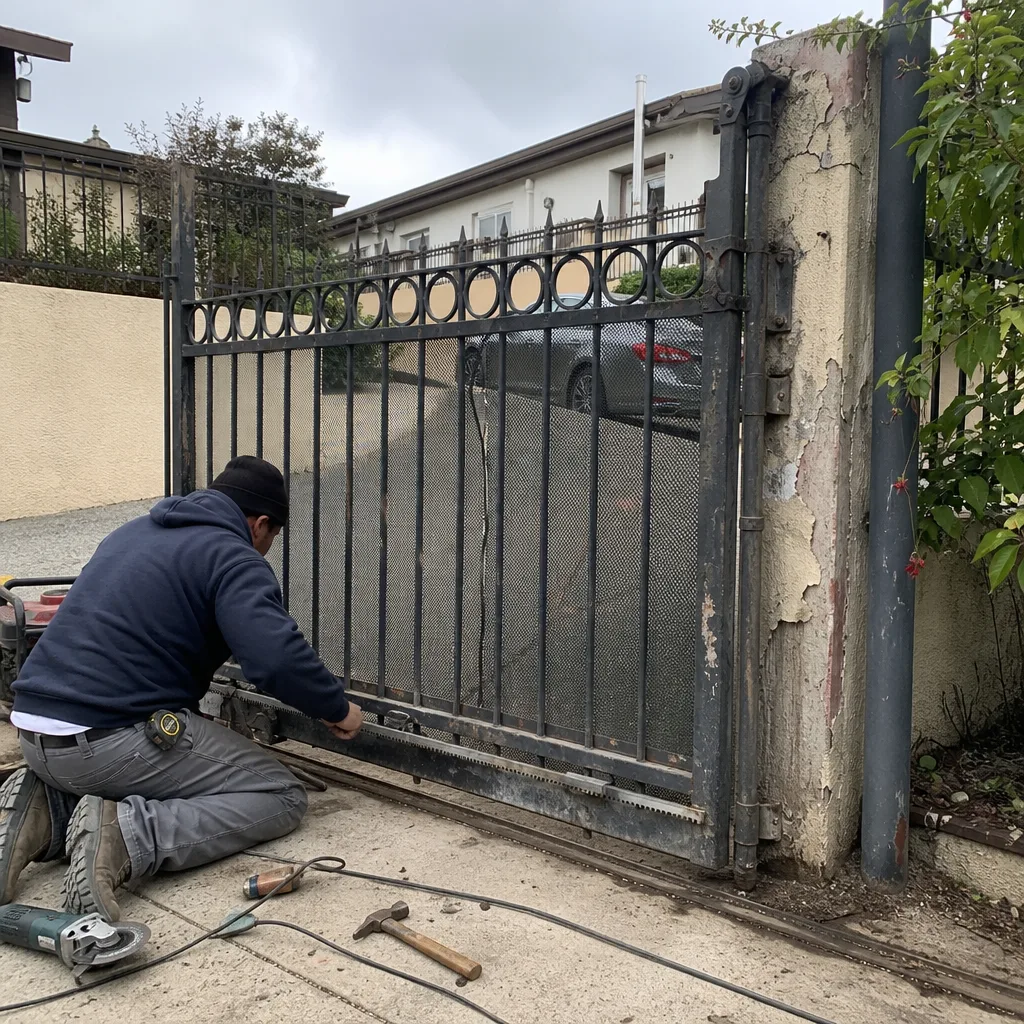
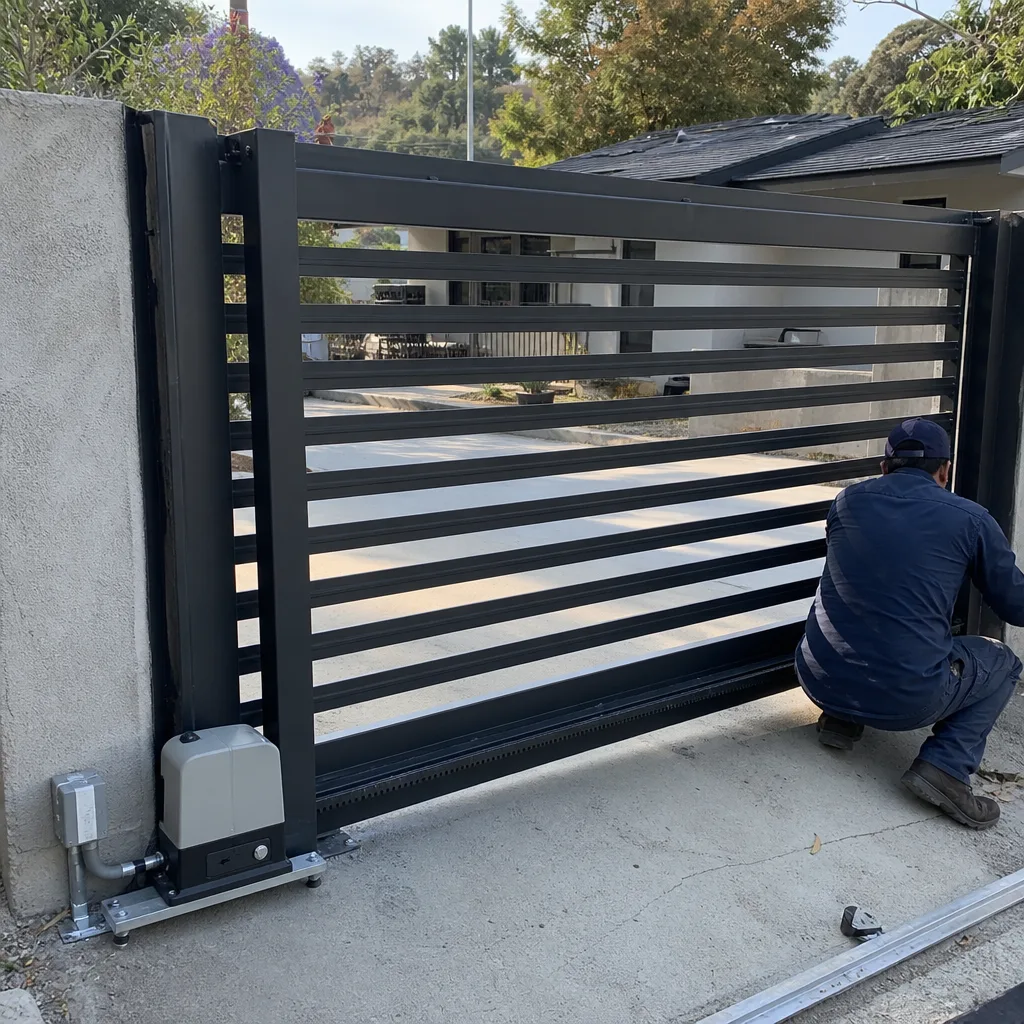
See the difference
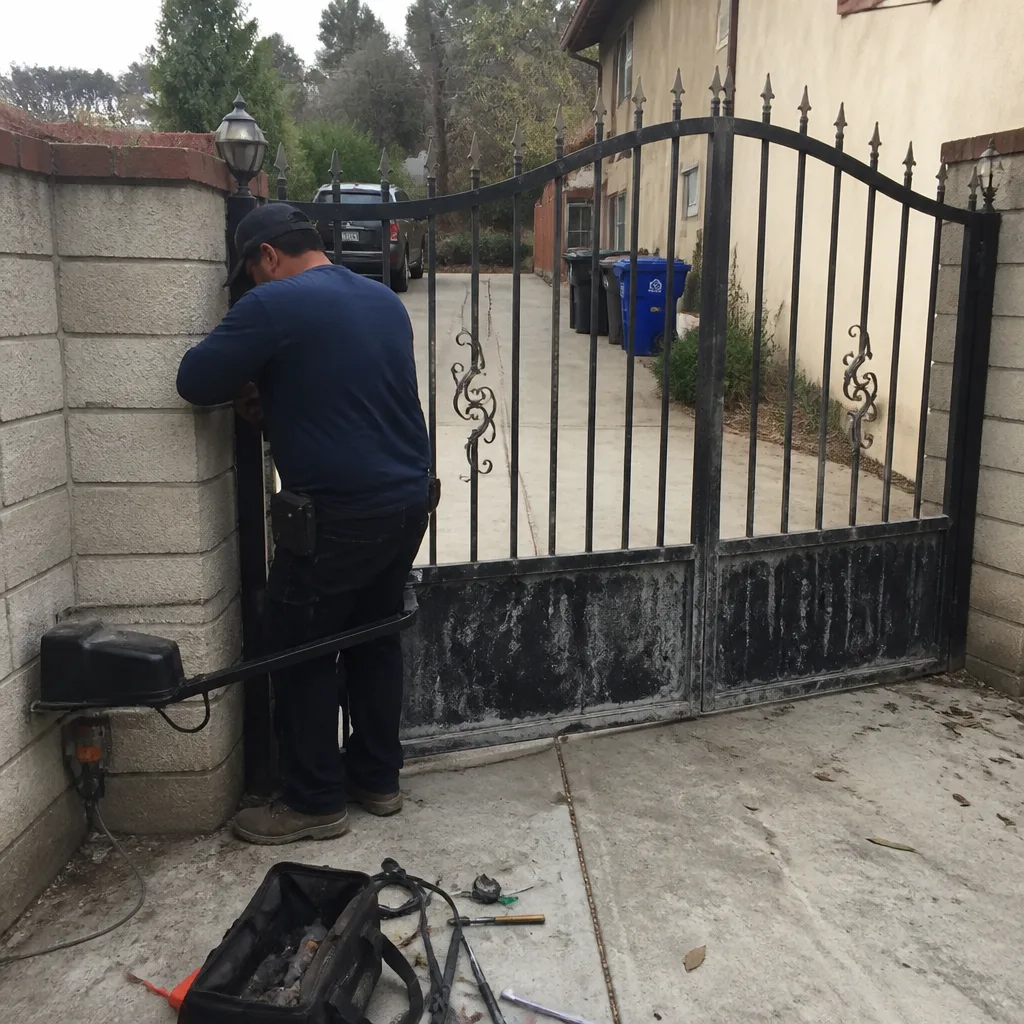 Before
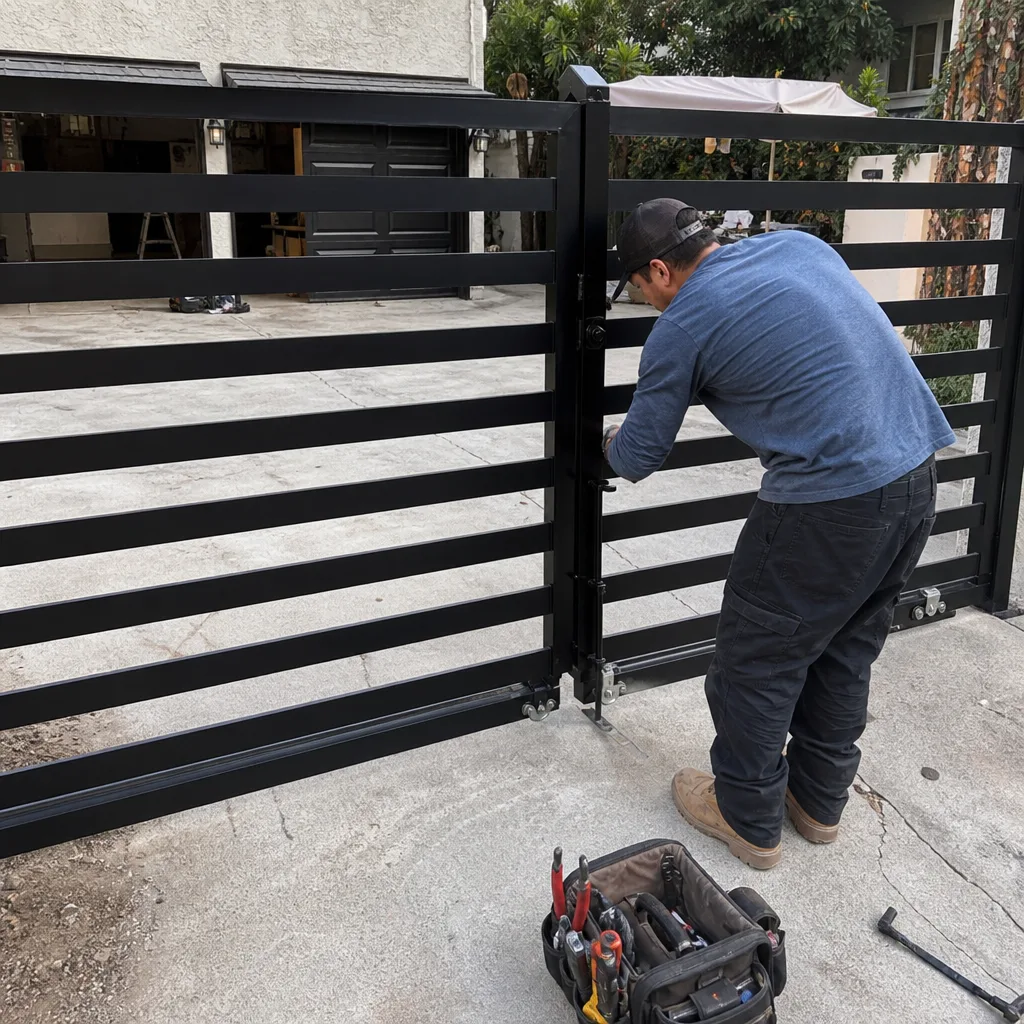 After
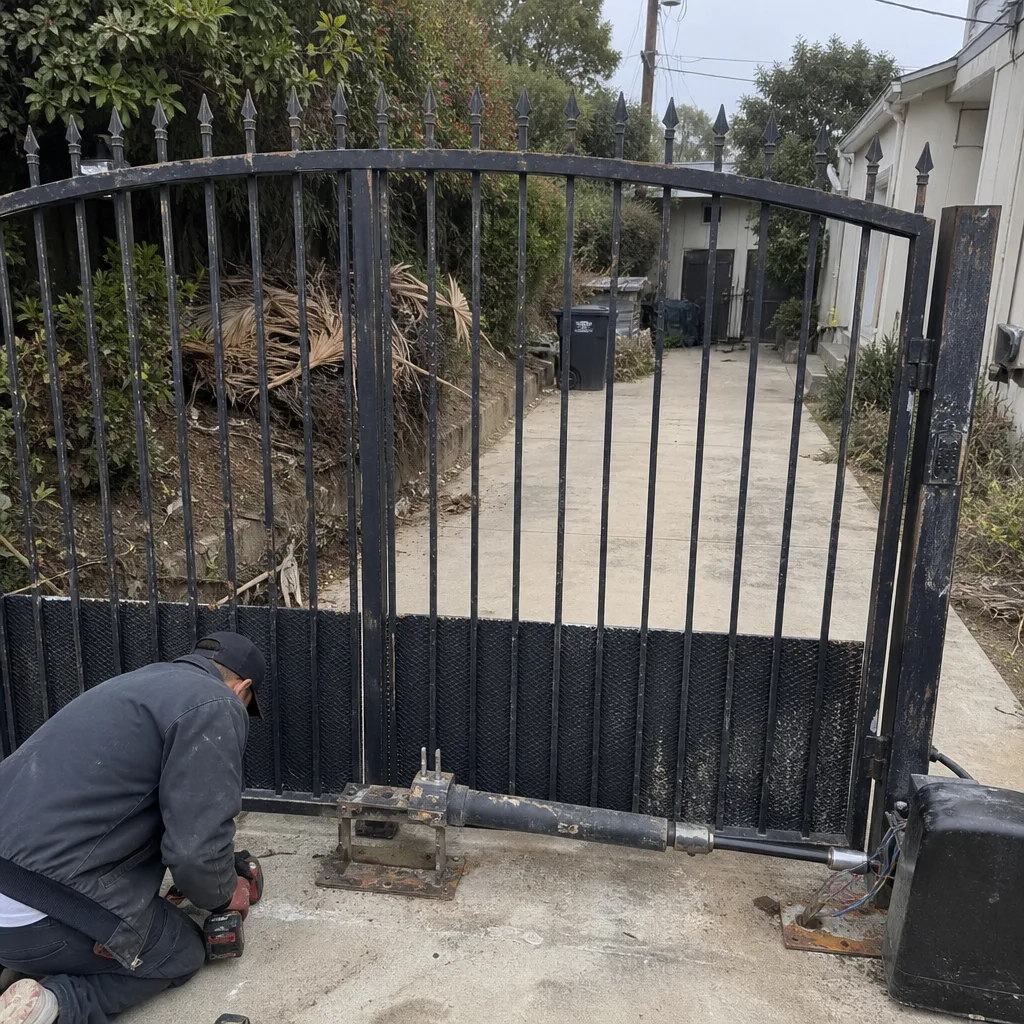 Before
 After
 Before
 After