
Last updated November 2, 2026
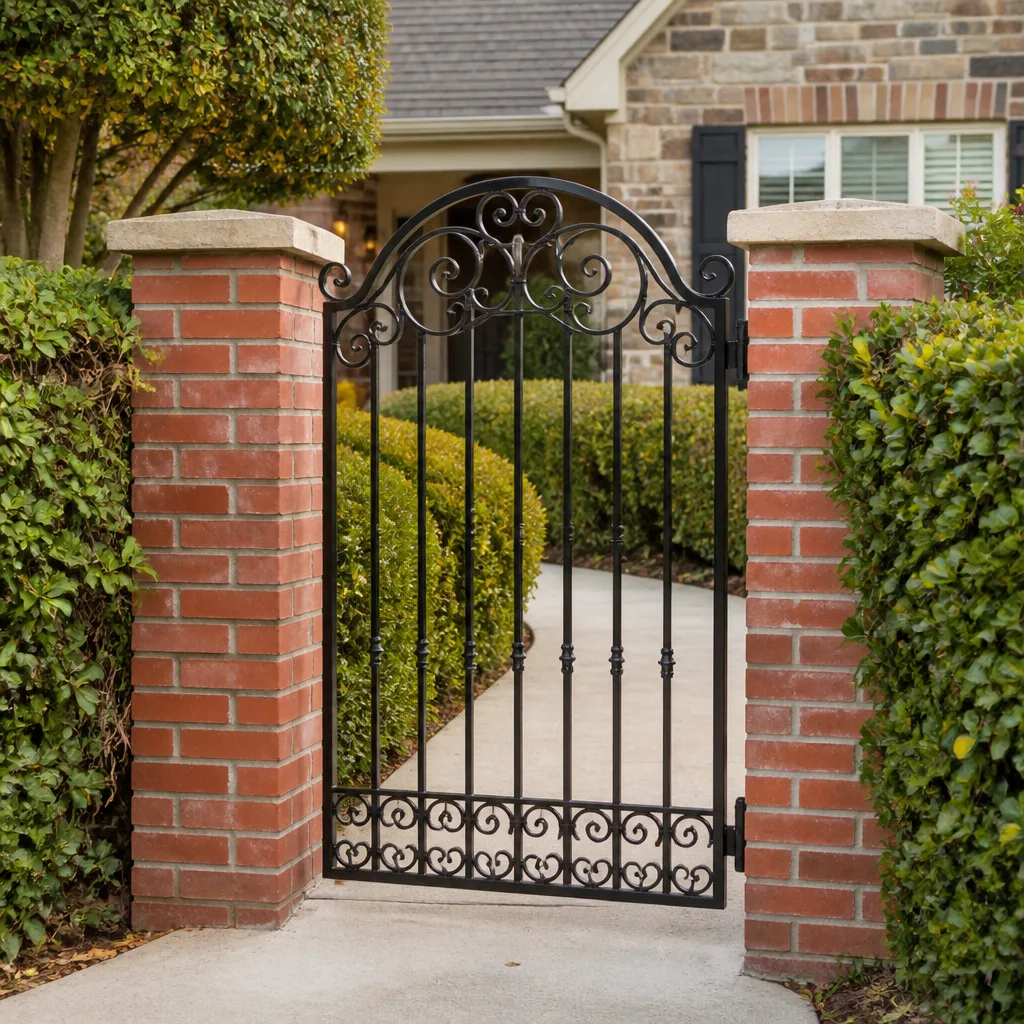 Wrought iron
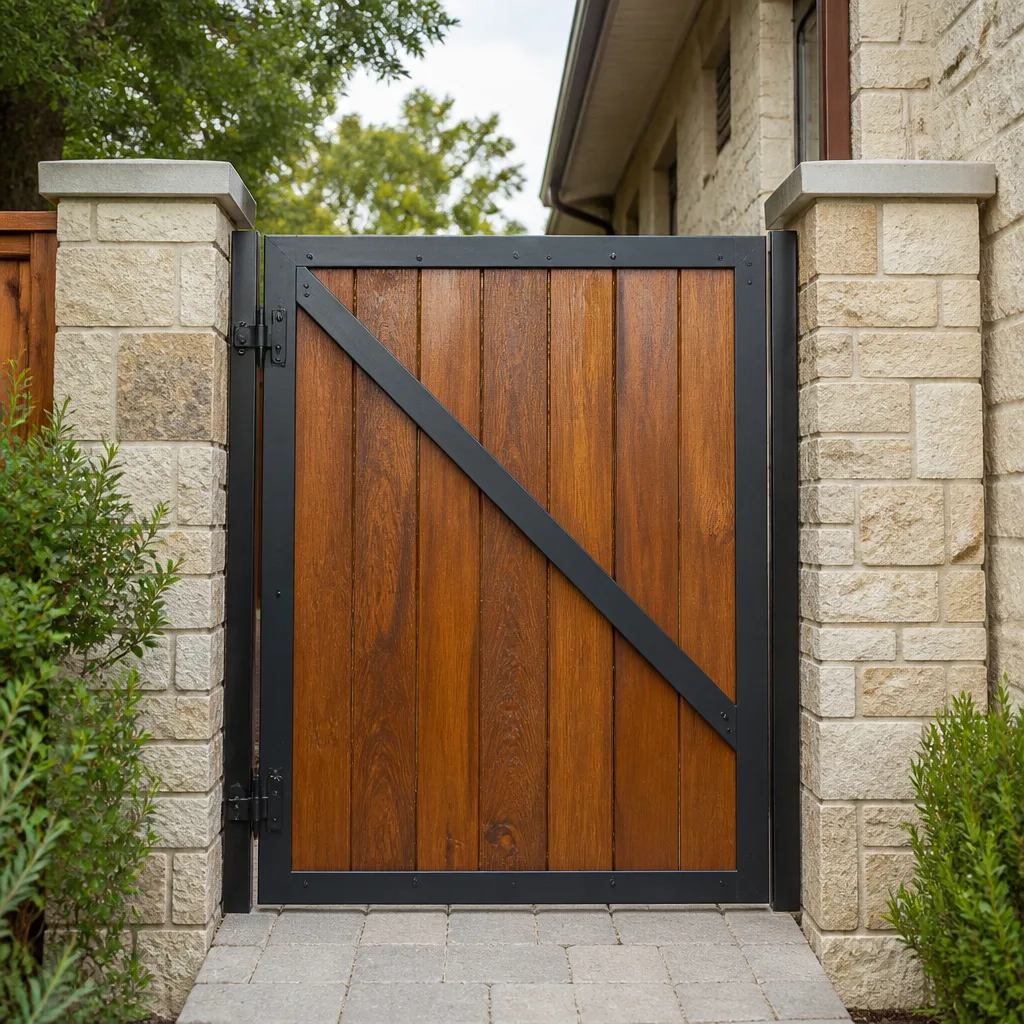 Wood & steel frame
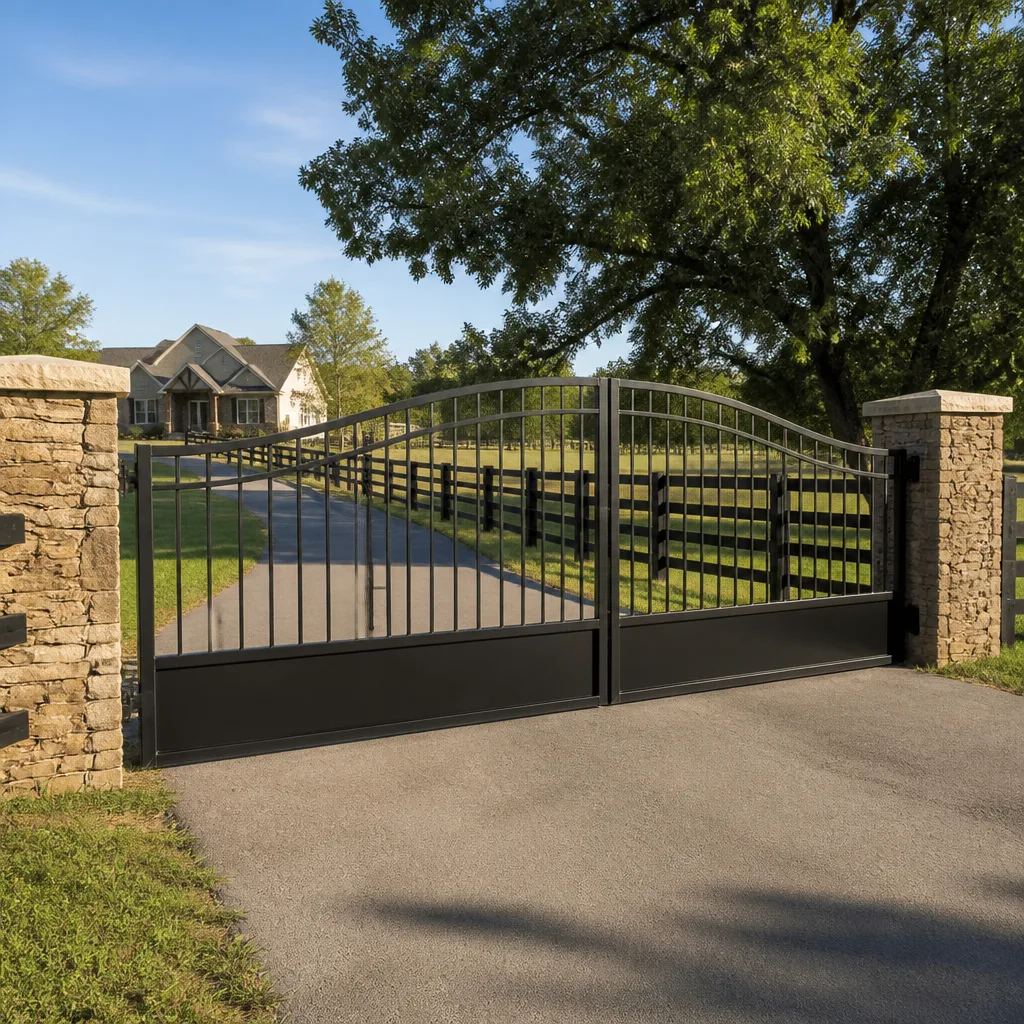 Farm & ranch
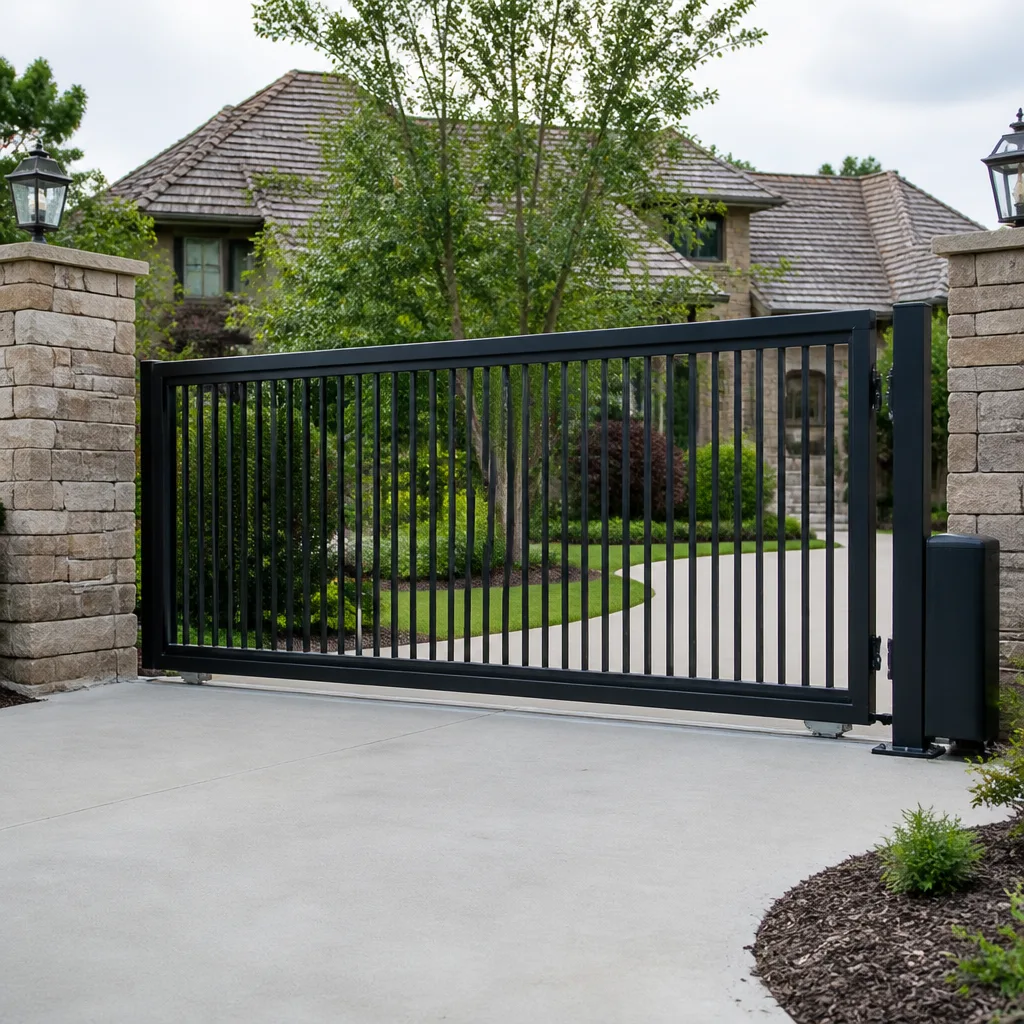 Sliding driveway gates
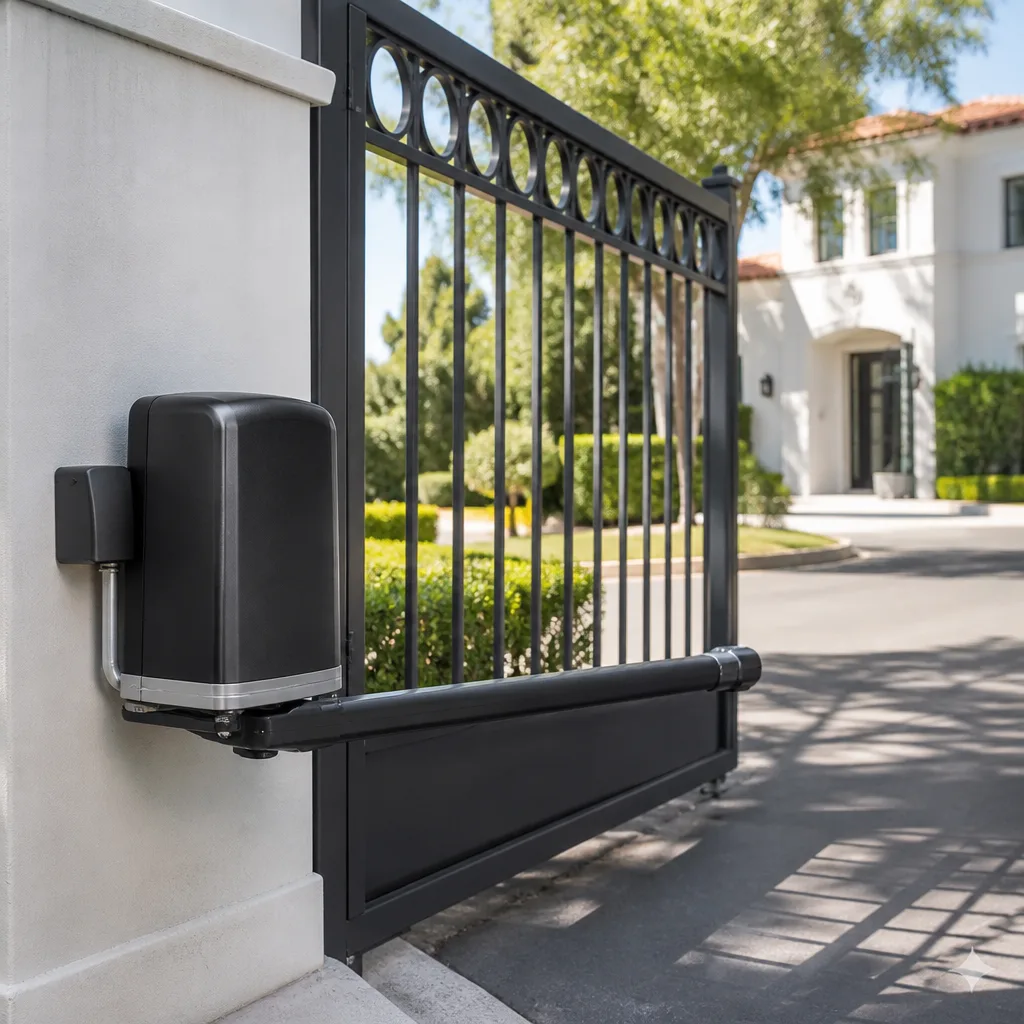 LiftMaster operators
Free on-site gate assessment - hinges, posts, and your LiftMaster or Nice gate operator checked before anything is quoted
The assessment is free and the quote is the invoice.
Get your free estimateGate Repair Warning Signs: A Montecito Heights Homeowner’s Reference Guide
A gate that hesitates for two seconds before moving isn’t “a little slow.” It’s a motor pulling overcurrent to overcome a mechanical problem that will burn out the operator within weeks if the underlying cause isn’t addressed. Most gate failures in Montecito Heights don’t happen suddenly. They announce themselves days or weeks in advance through sounds, small changes in movement, and physical tells that are easy to overlook when you’re pulling into the driveway after a long day. This guide translates those signs into plain language so you know what you’re looking at, what it means, and when it’s time to call a gate repair professional.
Quick Answer
The most common gate repair warning signs are a humming sound with no movement (capacitor failure or obstruction), grinding or clicking during operation (gear wear or limit switch failure), a gate that reverses mid-cycle or opens intermittently (sensor or control board issues), and visible physical changes like a sagging hinge or leaning post. For seasonal gate repair care in Montecito Heights, staying ahead of these signs is key. In Montecito Heights, hillside drainage and soil movement make post lean and gate drift more common than in flat neighborhoods. Any one of these symptoms, left alone, typically escalates from a $200 repair to an $800-plus operator replacement within a few months.
Styles & brands we work with
- Wrought iron
- Wood & steel frame
- Farm & ranch
- Sliding driveway gates
- LiftMaster operators
Table of Contents
- 1. Sound-Based Diagnosis: What Your Gate Is Telling You
- 2. Visual Tells on the Gate Structure
- 3. Operator Behavior Flags
- 4. Why “Works Fine Most of the Time” Is the Most Dangerous Pattern
- 5. Hillside-Specific Warning Signs in Montecito Heights
- 6. What It Costs to Ignore Early Warning Signs
- 7. Common Mistakes Homeowners Make
- 8. When to Call a Professional
- 9. Frequently Asked Questions
1. Sound-Based Diagnosis: What Your Gate Is Telling You
Gate motors communicate through sound before anything else fails. The challenge is that most people hear these sounds every day and stop noticing them, the same way you stop hearing the refrigerator hum. Here’s what we listen for when a Montecito Heights homeowner calls and says “it’s making a noise.”
Grinding or metallic scraping. This is almost always gear wear inside the operator. Gate motors use plastic or brass drive gears that are designed to be the sacrificial component, the part that wears out before the more expensive motor windings do. When those gears start stripping, you hear a rough grinding sound during movement. It’s louder under load, meaning when the gate is opening from fully closed or pushing against a slight incline. On a Linear or Viking swing gate operator, this sound often appears first on the opening stroke, where torque demand is highest. Left alone, the stripped gear eventually slips completely, and the motor spins without moving the gate at all.
Clicking during operation. A repetitive click-click-click while the gate moves usually points to the limit switch assembly, not the motor. Limit switches tell the operator where the gate ends its travel. When they’re dirty, misadjusted, or failing, they can chatter during movement. This is common on Ghost Controls and Mighty Mule arms that have been through a few rainy seasons. The click itself isn’t destructive, but it signals that the control board is receiving unreliable position data, which is how you end up with a gate that stops three feet short of closed or opens to a random angle.
Humming with no movement. This is the most urgent sound on the list. The motor is receiving power and trying to run, but the gate isn’t moving. Two causes account for the vast majority of cases. The first is a failed start capacitor, which is the component that gives the motor its initial kick. Capacitors degrade with age and heat, and when one fails, the motor hums but can’t start. The second cause is mechanical binding: a hinge that’s seized, a wheel that’s off its track, or a rack that’s jammed against the pinion. Either way, the motor is drawing locked-rotor current while it sits there, which overheats the windings quickly. If you hear this, don’t keep pressing the remote trying to get it going. Kill power to the operator and call for service.
Slapping or banging at the end of travel. A gate that slams open or shut with a hard hit at the end of its cycle has a failing end-of-travel cushioning system. On hydraulic operators like some FAAC and BFT models, this means low fluid or a worn bypass valve. On electromechanical operators, it’s usually a limit switch that’s out of adjustment. The hard stop sends shock loads through the entire gate frame, and over time that shock is what loosens hinge bolts, cracks weld joints, and causes the gate to sag. We see this pattern regularly in Montecito Heights: a gate that hits hard at the end of its travel for a year, followed by a hinge failure the homeowner thought came out of nowhere.
One note on sound diagnosis: record it. Take a short phone video of the gate making the noise before you call any repair company. In our experience, half of all “it makes a weird noise” calls turn out to be something completely different once the gate is operating normally during the service visit. A recording is the fastest way to give the technician a head start on the diagnosis.
2. Visual Tells on the Gate Structure
Most gate problems start with the structure, not the electronics. The motor is bolted to something, and if that something is moving, bending, or sagging, the motor working harder is the result, not the cause. Here’s where to look, and what you’re looking for.
The hinge line. Stand in front of the closed gate and sight down the hinge side. The gap between the gate and the post should be consistent from top to bottom. If it narrows at the top, the gate is sagging, which means a hinge bearing is wearing or the hinge plate has loosened from the post. If the gap widens at the bottom, the gate is crowning, which is often a sign of post lean rather than hinge wear. A sagging gate puts enormous lateral load on the motor coupling, and on chain-driven operators it’s the number one cause of premature sprocket and chain wear.
The post itself. Walk around to the back of the post and look at the ground where it enters the concrete or the soil. You’re looking for a hairline gap between the post base and the pad, or a visible lean when you sight down the fence line. In Montecito Heights, where many properties sit on fill or have drainage running through the yard, posts shift seasonally. A post that leans just two degrees can change the geometry of the entire opening enough to make a perfectly good operator bind on every cycle.
Track alignment. If you have a sliding gate, the track is the foundation of everything. Look at where the track meets the concrete pad. If you see a gap, cracked concrete, or a visible skew where the track is no longer parallel to the fence line, the track has shifted. You’ll also want to check the gate wheels themselves. A flat spot or a wheel that’s no longer rolling but skidding tells you the track is out of level and the gate is dragging. On a DoorKing slide operator, a dragging gate will eventually strip the drive chain or burn out the motor, and by then you’re looking at a much bigger invoice than a track level and wheel replacement would have been.
Weld joints and bolt tension. Look at every place metal meets metal. On an ornamental iron gate, the weld joints at the corners are the first thing to crack when the gate has been slamming or binding. Surface rust at a weld is often the first visible sign of a crack underneath. On a wood or composite gate, reach down and try to wiggle any exposed bolts. A bolt that turns freely but wasn’t designed to is a load-bearing bolt that’s already backed out partway.
The gate travel area. Look at the ground under the gate’s swing arc. If the gate is scraping a groove into the dirt, or if you see fresh chips in the concrete pad, the gate has dropped. Swing gates should have consistent ground clearance through their entire arc. A gate that’s dropped in the middle of the arc, even just half an inch, is rubbing on something and loading the motor differently every cycle. Rub points wear motors unevenly and make limit switches unreliable.
The visual check takes five minutes. It requires no tools and no technical background. What it requires is looking at the gate the way a technician looks at it, because by the time a visual problem becomes obvious enough to notice from the driver’s seat, it’s usually been developing for six to twelve months.
3. Operator Behavior Flags
The operator’s behavior, meaning how the gate responds when you press the remote or use the keypad, is the third diagnostic channel. Each behavior pattern points to a different failure category. Here’s what each one means when we hear about it on a call in Montecito Heights.
- Intermittent operation – works sometimes, doesn’t work other times. This pattern almost never points to the motor itself. It’s usually a control board issue, a failing receiver, or a wiring connection that’s loosening with temperature swings. Montecito Heights sees enough seasonal temperature variation that we get a wave of intermittent-operation calls every fall when the nights cool down and solder joints contract. The board works in the afternoon and quits at night. It’s the same board the whole time, but a cold joint opens up when it’s cold.
- Reversal mid-cycle. A gate that starts to open, stops, and reverses is almost always a safety sensor problem. The photo-eye or edge sensor is detecting an obstruction that isn’t there, or losing signal intermittently and defaulting to the safest action, which is reversal. Sometimes it’s as simple as a dirty lens or a sensor that’s drifted out of alignment. But on older systems, it can also mean the sensor’s internal relay is wearing out, which means the sensor needs replacement. The danger with reversal mid-cycle is that homeowners often disable or bypass the safety circuit because it’s “annoying,” which removes the only thing standing between the gate motor and a person in the gate’s path. We never recommend that, and we won’t do it on a service call.
- Remote range reduction. If you used to be able to open the gate from two houses down and now you have to be right in front of it, the receiver is losing sensitivity. This can be an aging receiver module, an antenna that’s been damaged or corroded, or radio interference that’s new to the area. In hillside neighborhoods like Montecito Heights, a poorly placed receiver antenna can also lose range seasonally if foliage grows in and blocks the signal path. The fix is often a new receiver, sometimes just an antenna relocation, but it’s a real diagnostic finding, not just a weak battery.
- Slow or labored movement. A gate that moves noticeably slower than it used to, especially on one section of its travel, is trying to tell you that load has increased somewhere. On a hydraulic operator, low fluid or a clogged filter reads as slow movement. On an electromechanical operator, it’s usually mechanical drag from the gate structure. Either way, the motor is working harder to do the same job, and the extra current draw shortens its life in direct proportion to how long you ignore it.
- The gate stops short of fully open or fully closed. This is a limit switch problem, pure and simple. On some operators the limit is mechanical, on some it’s magnetic, on some it’s programmed. But when a gate that used to open fully starts opening to 85 percent, the operator is no longer getting accurate end-of-travel information. The repair is usually straightforward and inexpensive. The cost of ignoring it is that the gate parks itself in a position where it’s more susceptible to wind load, and repeated operation near-hits the end stop, which is how hardware failures start.
4. Why “Works Fine Most of the Time” Is the Most Dangerous Pattern
In our experience, the single most common phrase on service calls is: “It works fine most of the time.” That phrase means the failure mode hasn’t been identified yet, and a failure mode that hasn’t been found can’t be predicted, scheduled, or contained.
Intermittent failure in an access control system is different from intermittent failure in, say, a light switch. A light switch that works “most of the time” is annoying. A gate that works “most of the time” is a security boundary that’s unpredictably open, unpredictably closed, or unpredictably unresponsive at exactly the moment someone needs to get in or out. For a Montecito Heights homeowner, that might mean getting stuck outside the gate at night. For a property manager, it means a resident calling at 2 a.m. because their remote won’t work and they can’t get their car out.
Intermittent symptoms are also financially dangerous because they tend to get “fixed” by guesswork. The homeowner replaces the remote batteries. The problem persists. They replace the remote. The problem persists. They buy a new keypad. The problem persists. By the time someone calls a gate specialist, they’ve spent $150 to $300 on parts that were never failing, and the actual problem, often a $40 capacitor or a $15 limit switch, has been sitting there the whole time.
The pattern to watch for: does the gate fail at the same point in the cycle every time, or at random points? Does it fail at the same time of day? Same weather conditions? Same remote, same keypad, same car? Each answer narrows the diagnosis. A gate that only fails when it’s hot points to an overheating thermal cutout. A gate that only fails with one specific remote points to the transmitter, not the operator. A gate that fails randomly with every remote, every keypad, and every button points to the control board or the power supply. There’s a logic tree to this, and a dedicated gate technician works through it the same way every time: reproduce the failure, isolate the variable, confirm the fix.
If the gate is misbehaving one morning out of ten, it will be one morning out of three by the time another month passes. Then it will be every morning until it quits entirely. The sooner the pattern is identified, the cheaper the fix.
5. Hillside-Specific Warning Signs in Montecito Heights
Montecito Heights sits on terrain that does things to gates that flat neighborhoods never see. The combination of hillside drainage, seasonal soil expansion and contraction, and the fact that many gates are mounted on retaining walls rather than flat pads means there are warning signs here that are worth watching for specifically.
Gate drift visible only at full-open position. This is subtle, and it’s specific to homes where the gate swings uphill or downhill at any point in its arc. A gate that’s perfectly balanced on a level lot will sometimes drift when fully open on a hillside, because gravity is doing something different to the gate at the far end of its travel. If you notice that the gate creeps a few inches after reaching full-open, or that the full-open position seems to be slightly different from week to week, the operator’s limit settings are fighting against a structural shift. It can also signal that the gate itself is changing weight distribution as hinge bushings wear, which changes the load on the operator at different points in the travel.
Post lean that only shows when you sight down the fence line. A leaning gate post is obvious from the street. A leaning post that’s part of a longer fence run is not. The trick: stand at one end of the fence line and sight down it like you’re aiming down the barrel of a rifle. If a gate post has moved, you’ll see a break in the line, even if the post itself looks straight from the front. In our experience, the post lean on hillside properties in Montecito Heights is usually not from the gate’s weight at all. It’s from water moving through the soil behind the post, pushing it gradually downhill over the course of several wet seasons. A post that’s moved even two inches changes the hinge geometry enough to make a properly adjusted operator bind.
Drainage-related erosion around the gate pad. Look at the concrete pad the operator sits on, or the post foundation if you have in-ground hinges. If you’re seeing wash-out, small channels cut into the soil by runoff, or the beginning of a gap between the concrete and the ground, water is under the pad. Water under a concrete pad creates a void, and a gate post or operator post with a void under one corner will eventually shift. In hillside terrain, this shifts faster than people expect because gravity is working on the soil too, pulling it downslope toward whatever drainage path exists.
Wind-load sensitivity on exposed properties. Some Montecito Heights homes sit on ridgelines where the wind funnels through. A gate that’s been working fine for years will sometimes start to stall or reverse when the wind hits a certain speed. This is wind load overcoming the operator’s torque, and it’s more common on solid-panel gates than ornamental ones. The fix is usually a torque adjustment or a larger operator, but the warning sign is worth tracking: note the wind speed and direction when the gate fails, and tell the technician. A gate that’s wind-sensitive is also a gate that’s working at the very top of its capacity, which means any additional load from sagging hinges or debris in the track will push it over the edge.
The hillside-specific lesson is simple: on a slope, no gate failure is purely the gate’s fault. The ground is involved. Diagnosing the gate means diagnosing the ground too, because in Montecito Heights, the ground moves.
6. What It Costs to Ignore Early Warning Signs
We get a lot of calls that start with “I probably should have called a few months ago.” Here’s what those months actually cost, based on what we see in Montecito Heights and the surrounding neighborhoods.
- Worn drive gear caught early: $180 to $250 for a gear replacement, including labor. Ignored until the gate stops: The stripped gear takes out the motor shaft bearing, and the repair becomes a full operator rebuild or replacement at $650 to $1,200.
- Failing capacitor caught early: $40 for the part, maybe an hour of labor. Ignored through repeated humming episodes: The motor overheats repeatedly until the winding insulation breaks down. New motor or new operator: $500 to $900.
- Sagging hinge caught early: Hinge replacement or rebuild, $150 to $400 depending on gate weight and hinge type. Ignored until the gate drops: The gate falls, bends the mounting plate, possibly cracks the post or the pad, and the repair now includes gate realignment, post repair, and possibly cable or chain damage on the operator side. $800 to $1,500 is not unusual.
- Track misalignment caught early: Track level and wheel adjustment, $200 to $350. Ignored until the gate derails: The gate comes off the track, damages the rack, bends a wheel bracket, and requires equipment to lift the gate back into place. $700 to $1,400.
- Intermittent control board issue caught early: A board repair or replacement, $250 to $450 on most residential operators. Ignored until the board fails completely while the gate is open: You now have a gate stuck open with a dead control system, which is a security emergency, and you’re paying emergency dispatch rates to fix the same board you could have replaced during normal hours.
The pattern here isn’t subtle: every category doubles or triples in cost between the early-warning stage and the total-failure stage. The gate always fails at the worst time, because gates don’t know what the worst time is, but momentum is real. The day the gate finally quits is the day you needed it to work.
We’re a Lighthouse Gate Repair home company that works on gates because we’re gate specialists, not generalists. That focus matters when the question is “repair or replace” because a brand-agnostic diagnostic approach, meaning we service what you have rather than pushing replacement with a preferred brand, is the only honest way to answer it. If your Linear operator needs a gear, the gear is the right call. If the gear failure is the third failure the operator has had this year, replacement is the right call. The difference is knowing which one, and not having a financial incentive to choose wrong.
7. Common Mistakes Homeowners Make
- Waiting until the gate fails completely before calling anyone. This converts a predictable, schedulable repair into an emergency call with the gate stuck open, stuck closed, or halfway in between. Every month of ignoring a symptom adds cost to the eventual repair.
- Replacing remotes, batteries, and keypads before diagnosing the problem. We covered this earlier, but it bears repeating because it’s the single most expensive non-fix we see on residential gates. The parts you’re replacing usually aren’t failing. Get a diagnosis before you buy a single thing.
- Disabling safety sensors or bypassing the reversing edge. This removes the one system designed to prevent the gate from crushing a person or a car. It’s not a fix, it’s a liability upgrade. In Montecito Heights, where many gates are on narrow access roads with pedestrian traffic, it’s a serious safety risk, not just a convenience decision.
- Lubricating everything without knowing what to lubricate (or not). Gate hinges need lubrication, but operator internals don’t always benefit from the same treatment. Spraying lubricant into a motor or onto a control board creates new problems. Use the right product on the right components, or ask before you spray.
- Ignoring hillside soil movement because “it’s always been that way.” Soil movement that’s always been there is still movement. It’s pressure, and pressure eventually wins. If the ground is shifting against a post, the post is shifting against the gate, and the gate is shifting against the operator. It’s all connected.
- Assuming gate repair is a handyman job. A gate that keeps your property secure and operates maybe fifteen hundred times a year is not a fence panel. It’s an electromechanical system with a control board, safety circuits, and a motor that has to be sized and adjusted correctly. The person who fixes your fence is almost never the right person to diagnose your gate operator. Hire a gate technician for the gate. For residents looking specifically for Gate Repair in Montecito Heights, it’s worth asking any company whether their technicians work on your brand of operator, not just whether they claim to repair gates generally.
8. When to Call a Professional
If the gate is humming and not moving, cut power to the operator and call a professional. That’s not a wait-and-see situation. If the gate has reversed mid-cycle more than once in a week, call. If you can see visible sag on the hinge line or lean on the post, call, because the structure is already moving and the longer it moves the more the repair will cost. If the remote only works up close, or only works sometimes, call. And if the gate has started making any new sound, any sound it wasn’t making last month, call with a recording of the sound ready. The diagnosis starts before the truck rolls.
For Montecito Heights homeowners who want a set of eyes on the gate before committing to a repair, we offer free estimates. We’ll send a gate technician, not a general handyman, to look at the full system: structure, operator, sensors, and access controls. If you’re also in the market for a new operator or a full Gate Installation in Montecito Heights, we’ll answer the repair-versus-replace question honestly, because we work on your brand, whatever it is. That’s not a sales tactic. It’s the only way to do this work and stand behind the result. Call (866) 569-5320 for a free estimate, or use the contact form and we’ll call you back.
9. Frequently Asked Questions
A humming gate that doesn’t move is either a failed start capacitor or serious mechanical binding in the structure. The motor is receiving power, so the problem is not the remote or the receiver. Kill the power at the breaker to avoid overheating the motor and get a technician on site quickly. This is one of the few gate problems we treat as a same-day priority, because every minute the motor hums, it’s cooking its own windings.
Stand in front of the closed gate and look at the gap between the gate and the post along the hinge line. If the gap narrows toward the top or widens toward the bottom, the gate is sagging or crowning. A sagging gate loads the motor unevenly and accelerates wear on hinges, chains, and drive gears. In most cases, the earlier it’s caught, the cheaper the hinge rebuild.
A gate that reverses mid-cycle is almost always receiving a false signal from its safety sensors, meaning the photo-eye or reversing edge is detecting an obstruction that isn’t there. It can also be a failing sensor relay. The problem is not something to solve by disconnecting the sensor. The right move is a sensor alignment, cleaning, or replacement, and it’s usually a quick fix when caught early.
Gate repair in Montecito Heights typically runs $150 to $600 for the most common issues, including gear replacement, limit switch adjustment, sensor realignment, and track work. Full operator replacement on a residential gate usually lands between $650 and $1,200 depending on the brand and model. Every repair includes a diagnosis first and the price is quoted and agreed before any work starts. Call (866) 569-5320 for an exact quote, estimates are free.
Yes. We service LiftMaster, FAAC, BFT, Linear, Viking, Ghost Controls, DoorKing, Elite, and Mighty Mule systems, and we don’t sell gates, so we have no incentive to steer you toward one brand over another. If it’s an electric gate and it’s serviceable, we’ll work on it. For electric gate issues specifically, learn more at Electric Gate Repair in Montecito Heights.
On our hillside properties, we recommend an annual inspection at minimum, and twice a year if the gate is on a retaining wall, sits near a drainage path, or gets heavy wind exposure. An annual service catches hinge wear, post movement, and sensor alignment issues before they become repairs. It’s the difference between a $150 tune-up and a $900 operator replacement.
The Bottom Line
Gates speak before they fail. The sounds, the small changes in movement, the visual drift of the structure; all of it is data. The gate that hesitates before it opens is telling you about motor load. The gate that reverses mid-cycle is telling you about its safety sensors. The gate that only fails when it’s cold is telling you about a board with a bad solder joint. In Montecito Heights, where the hills add soil movement and drainage to the equation, the gate is also telling you about the ground underneath it. Listen to all of it, act early, and the repair is usually measured in hundreds, not thousands. And when you need a gate specialist who works on your brand rather than pushing a new one, call Lighthouse Gate Repair at (866) 569-5320.
Written by the team at Lighthouse Gate Repair, serving Montecito Heights since 2018. For more guides & resources, visit our blog.
See the difference
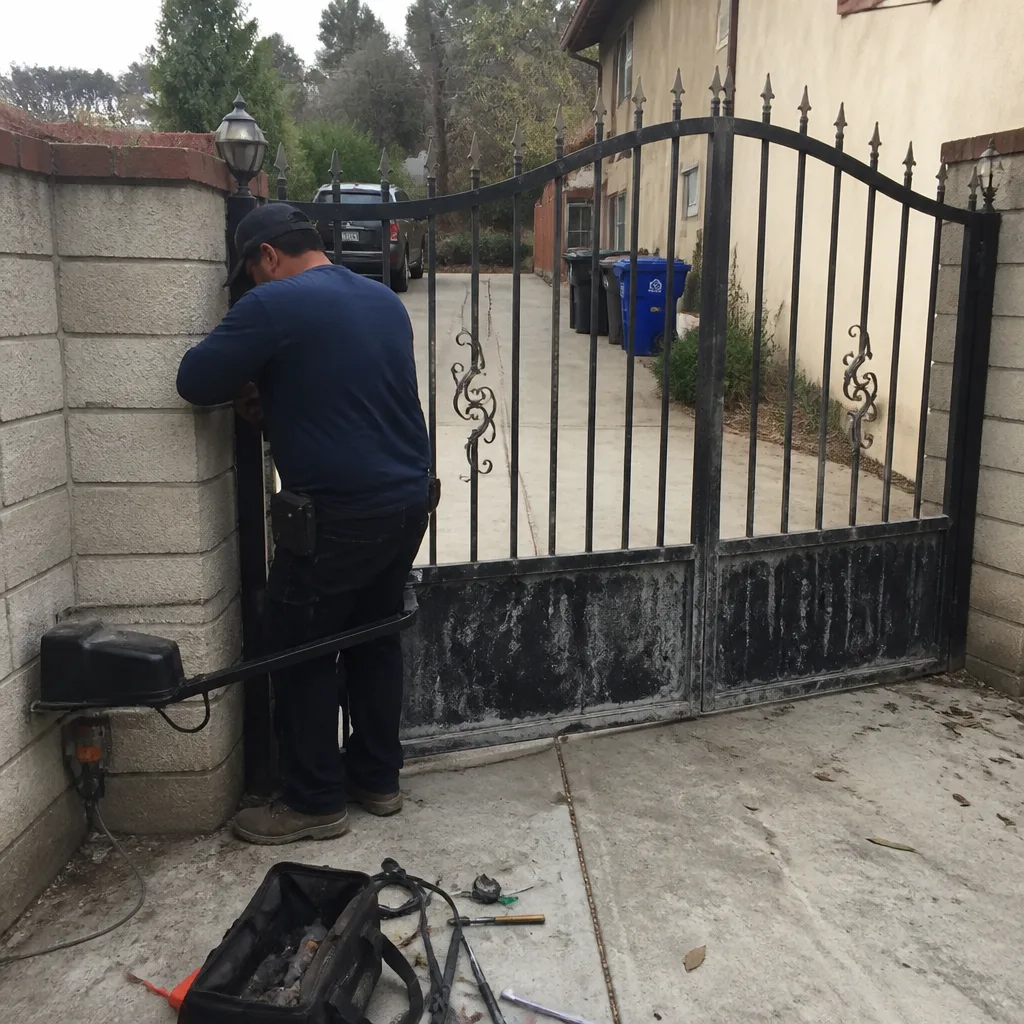 Before
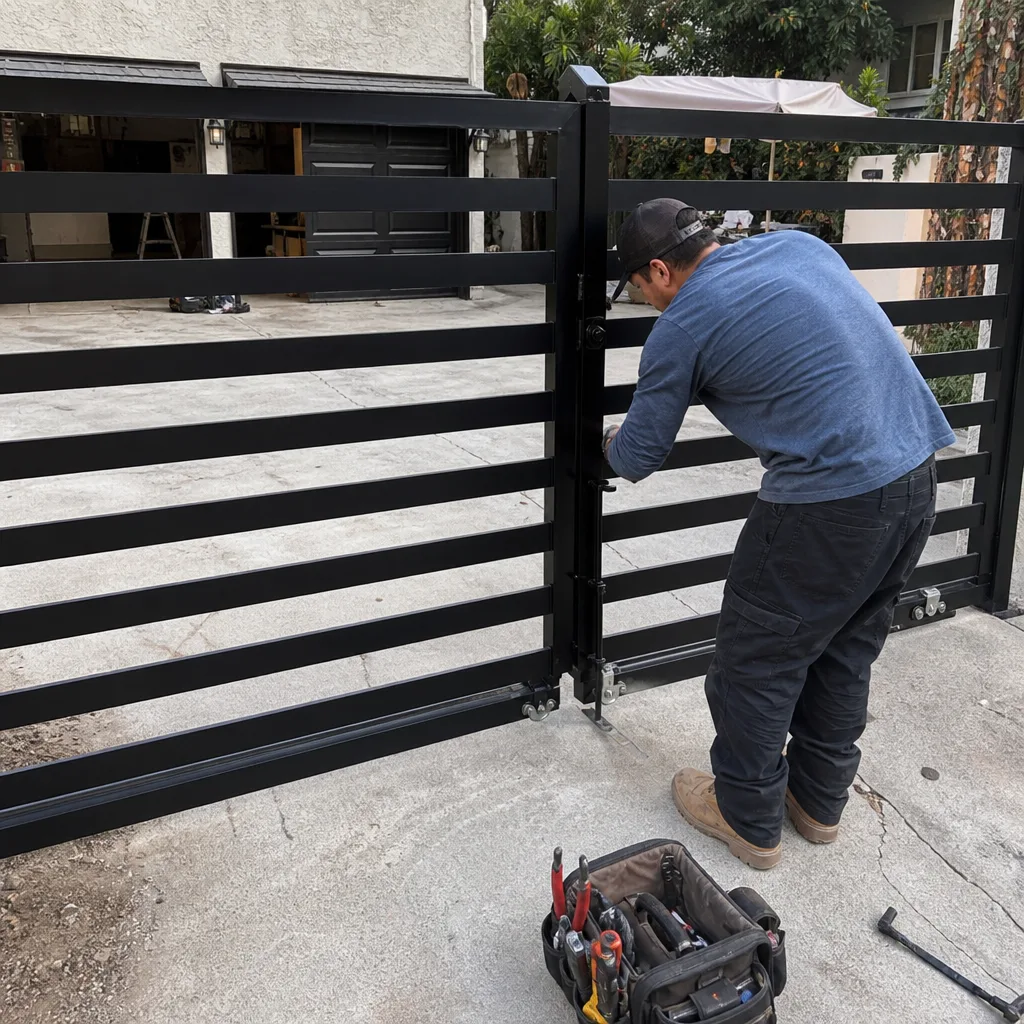 After
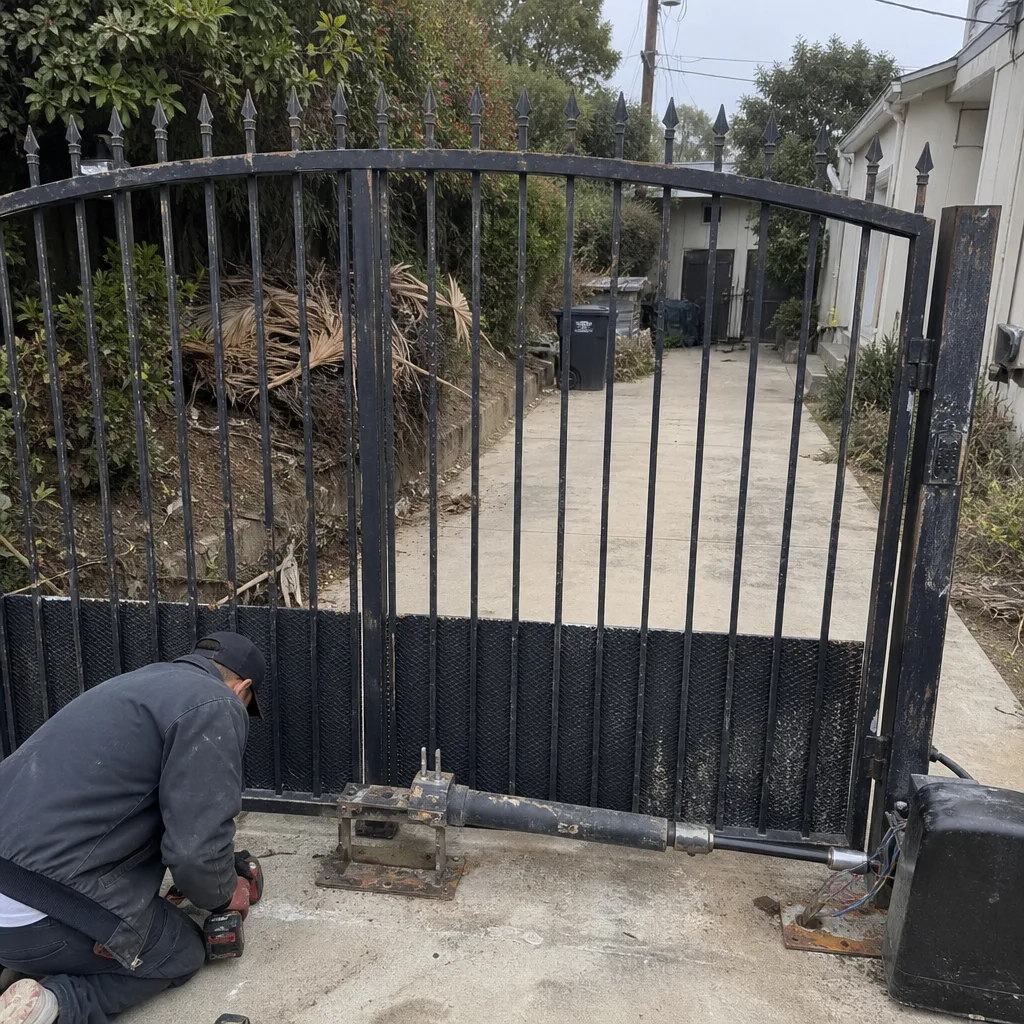 Before
 After
 Before
 After