
Last updated November 2, 2026
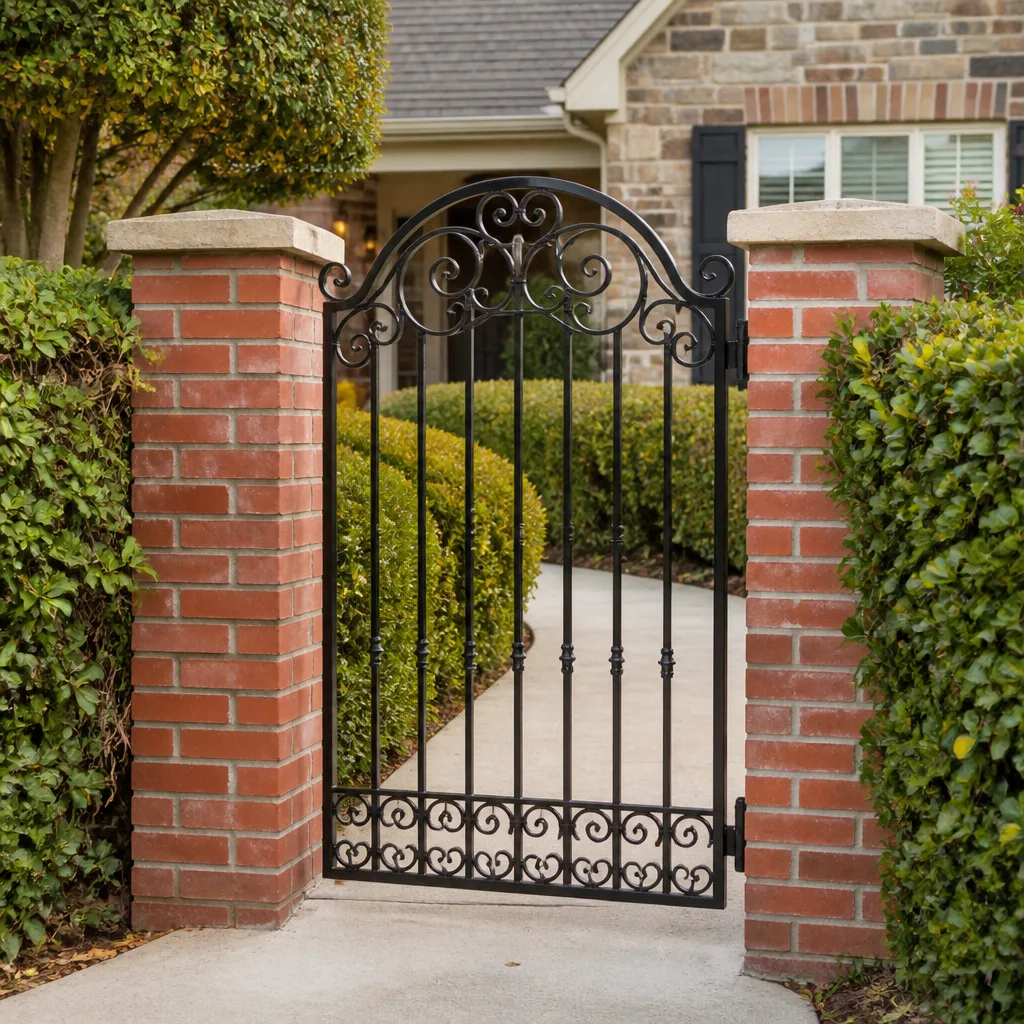 Wrought iron
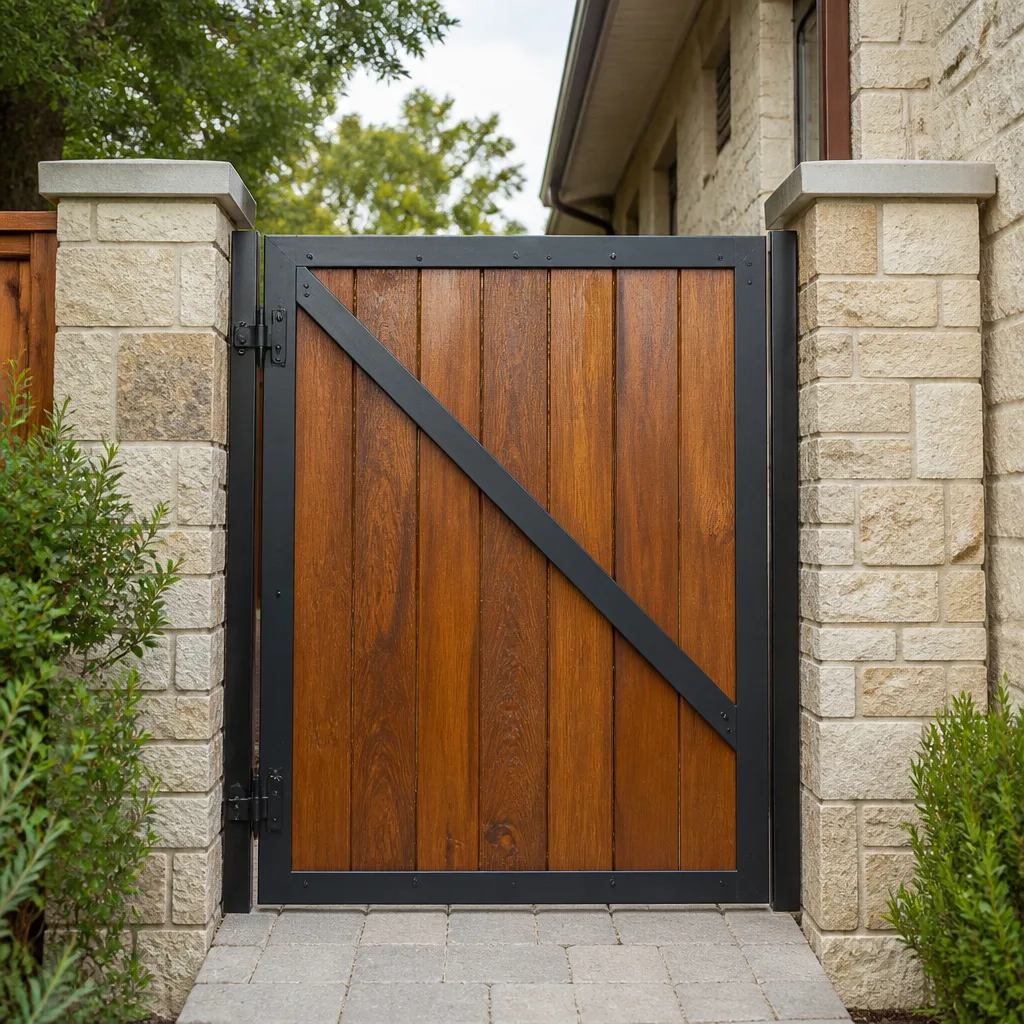 Wood & steel frame
 Farm & ranch
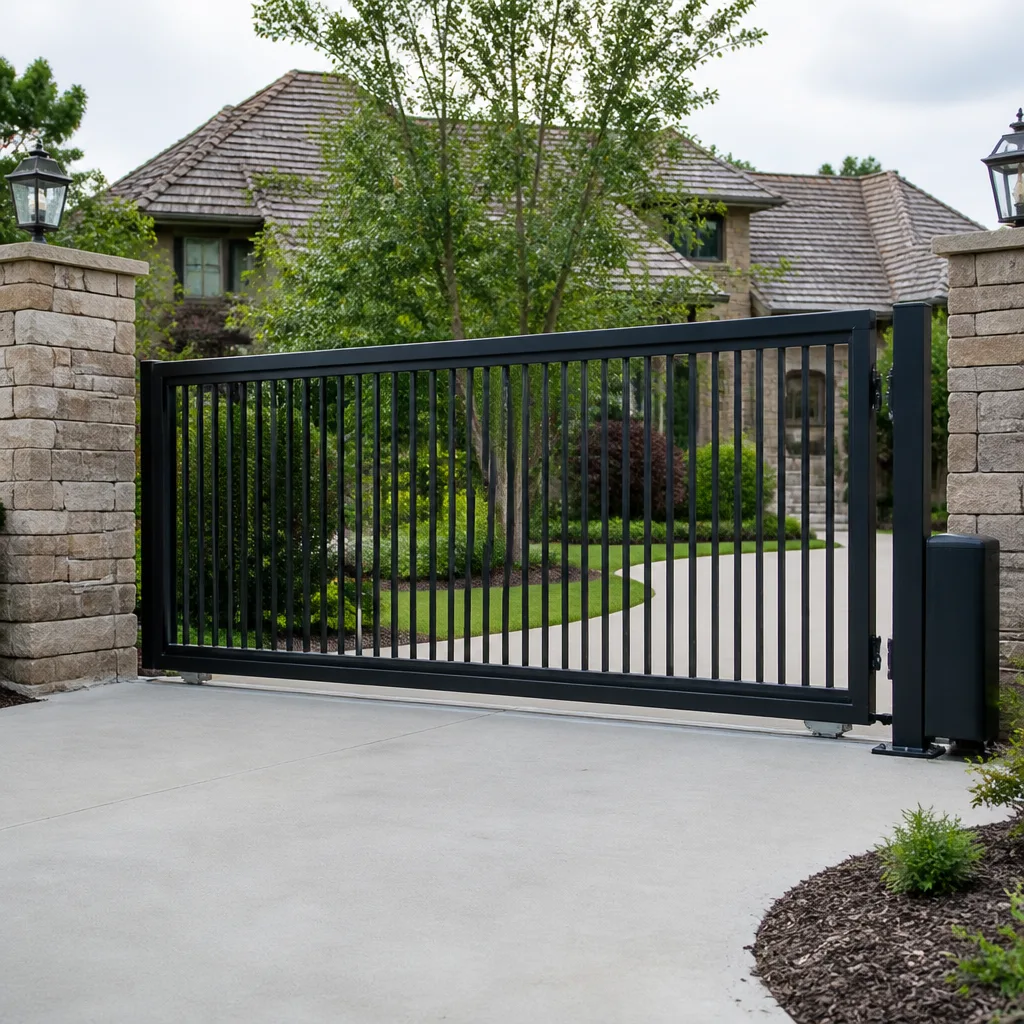 Sliding driveway gates
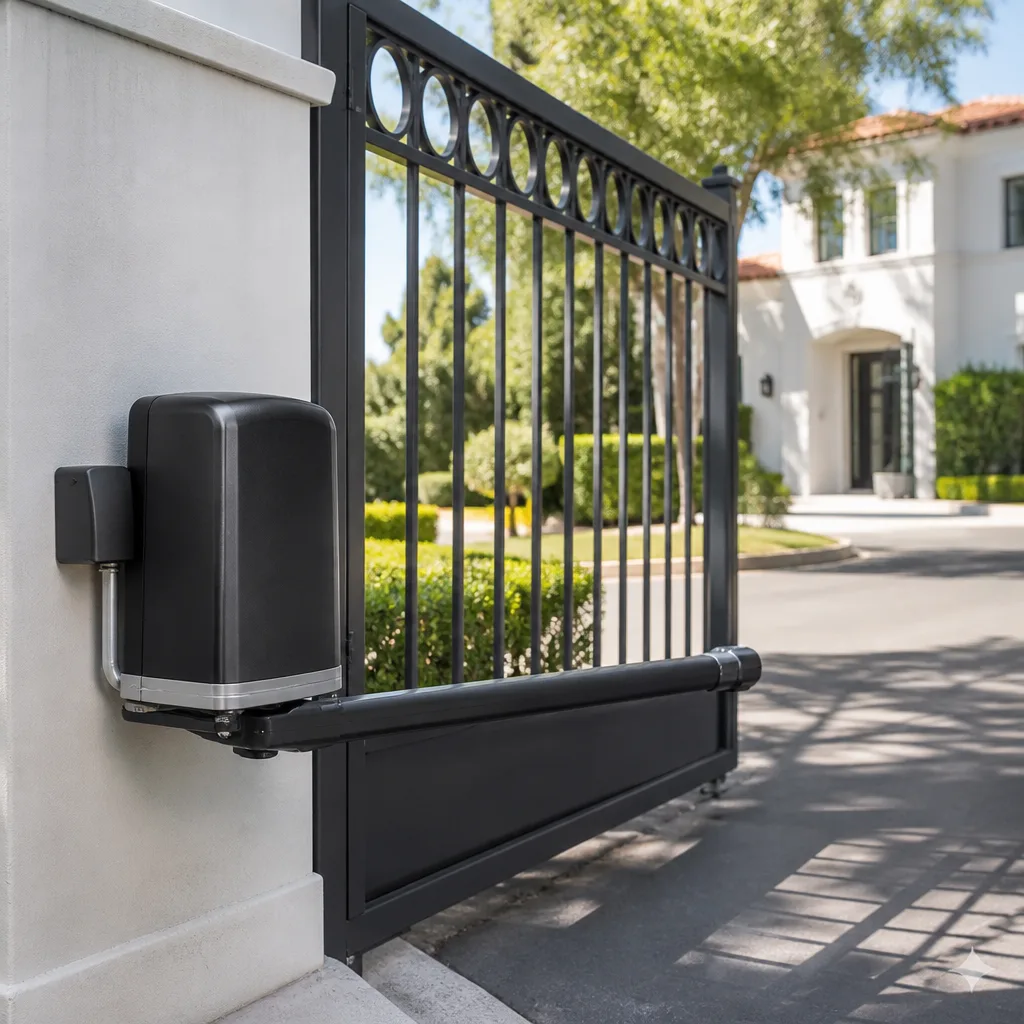 LiftMaster operators
Free on-site gate assessment - hinges, posts, and your LiftMaster or Nice gate operator checked before anything is quoted
The assessment is free and the quote is the invoice.
Get your free estimateSeasonal Gate Repair Care for Montecito Heights: Year-Round Homeowner’s Guide
Southern California’s “mild climate” is a myth for gate hardware. The swing from dry Santa Ana conditions in October to El Niño-driven rain in January creates expansion-contraction cycles in metal components that rival freeze-thaw damage in colder states. In Montecito Heights, where hillside lots and older post footings are the norm, the seasonal rhythm of the neighborhood does more to a gate than most homeowners realize until a motor burns out or a hinge tears loose. This guide maps the maintenance actions that actually matter for the four stress cycles we see every year, so you’re never standing in your driveway at 7 a.m. with a gate that won’t open. For a deeper dive, see our The Complete Gate Repair Guide for Montecito Heights Homeowners.
Styles & brands we work with
- Wrought iron
- Wood & steel frame
- Farm & ranch
- Sliding driveway gates
- LiftMaster operators
Quick Answer
Seasonal gate care in Montecito Heights means testing your manual release before fire season, inspecting hinges and tracks after Santa Ana wind events, checking post footings for soil movement during the January – March rainy months, and replacing battery backups before summer heat degrades them. Most failures are predictable, and a 10-minute seasonal inspection catches the problem while it’s still a $150 fix instead of a $1,200 motor replacement.
Table of Contents
- Pre-Fire Season Prep (August – September): The Manual Release Test
- Santa Ana Wind Load: What 50+ MPH Gusts Do to Your Gate
- Rainy Season Soil Movement: The Five-Minute Post Footing Check
- Summer Heat and Control Boards: What Actually Fails
- Battery Backup Systems: The Temperature Threshold That Matters
- Photographing Your Gate: The Year-Over-Year Drift Log
- Common Mistakes to Avoid
- When to Call a Professional
- Frequently Asked Questions
- The Bottom Line
Pre-Fire Season Prep (August – September): The Manual Release Test
Montecito Heights sits in a high fire severity zone. When an evacuation order comes, you don’t have time to troubleshoot a gate that won’t open because the power is out or the motor seized. Every August, before the Santa Ana season kicks in, test your gate’s manual release mechanism. Here’s how:
- Locate the manual release. On most residential swing and slide operators, it’s a keyed cylinder or pull handle on the operator arm or motor housing. On Ghost Controls and Mighty Mule residential systems, it’s usually a pull-to-release lever near the motor. On DoorKing and Elite commercial operators, look for a keyed disconnect on the operator itself.
- Disengage the operator. Turn the key or pull the handle until you hear or feel the operator disengage from the gate leaf. The gate should now swing or slide freely by hand.
- Move the gate manually through its full travel. Push or pull it open and closed. You’re feeling for resistance, grinding, or a catch that would make a manual evacuation exit slow or impossible.
- Re-engage the operator. Lock it back in and run a full open/close cycle to confirm the motor reconnects cleanly.
If the release is stiff, rusted, or you can’t find it in under 60 seconds, that’s a failure point. In our experience across Montecito Heights, we regularly see manual releases that haven’t been touched since installation. A gate that won’t disengage during a power outage is a wall, not a gate. We work on every major brand, and the manual release is brand-agnostic: it either works or it doesn’t, and you want to know before October.
This is also the time to check your photoelectric safety sensors. The dusty end of summer coats sensor lenses, and a blocked beam is the most common reason a gate refuses to close or reverses mid-cycle. Wipe the lenses with a dry cloth. If your gate still won’t close, the sensor may be misaligned rather than dirty. An electric gate repair specialist in Montecito Heights can diagnose that in one visit.
Santa Ana Wind Load: What 50+ MPH Gusts Do to Your Gate
Santa Ana winds don’t just blow leaves around. Sustained 50 to 70 mph gusts push against a closed gate leaf with hundreds of pounds of force. For a swing gate, that force transfers through the hinges into the post. For a rolling gate, it loads the track rollers and the top guide. The failure looks different in each system, and knowing which you have determines what to inspect after every significant wind event.
Swing gates: After a Santa Ana event, look at the hinge welds and bolts. Cracks in a weld start as hairline fractures you can see before they snap. Check the gate’s closed position: has the leaf sagged so it no longer lines up with the latch or the operator? That sag means the post is leaning or the hinge bearings are wearing. In Montecito Heights, where many properties are on slopes, a wind-loaded gate also puts lateral stress on the post footing, compounding any pre-existing soil instability.
Rolling gates: Inspect the track for debris and the rollers for flat spots. A 60 mph gust can drive a rolling gate into its end stop hard enough to flatten a roller, and then the gate no longer rolls smoothly. Listen for a thump-thump-thump during the next open cycle. That’s a flat roller, and it’s a 20-minute fix if you catch it before it damages the track itself.
We diagnose first, and after a wind event, the diagnosis is mechanical rather than electronic. If your gate still opens but sounds different, that sound is information. Write it down, photograph it, and compare it next week.
Rainy Season Soil Movement: The Five-Minute Post Footing Check
Montecito Heights has hillside lots with expansive soil. When January and February rains saturate the ground, the soil swells. When it dries in March, it shrinks. This cycle moves post footings slowly, and you can catch that movement with a five-minute check before it becomes a gate that won’t latch or an operator fighting a misaligned track.
Here’s the check:
- Stand back and sight the gate leaf against the post. Is the gap between the leaf and the post even top to bottom? A tightening gap at the top or bottom means the post has rotated.
- Look at the post base. Fresh cracking in the concrete collar around the post, or a visible gap between the post base and the surrounding concrete or soil, means movement.
- Open the gate fully and watch the leaf. If it dips or rises as it travels, the post is no longer plumb. This is especially common on hillside lots in Montecito Heights where one post is on the uphill side and one is on the downhill side.
- Check the operator’s attachment point. If the operator mounting bracket is pulling away from the gate or the post, the post is moving more than the bracket can tolerate.
This inspection catches 90% of post-shift issues early, in our experience. A post that’s moved half an inch can often be corrected with re-shimming or a brace. A post that’s moved three inches needs a new footing, which means excavation and concrete work. The difference is months of advance warning. For a full guide on this, see our page on Gate Repair in Montecito Heights.
Summer Heat and Control Boards: What Actually Fails
When we get a heat wave in Montecito Heights, the calls start coming for gates that work in the morning and die by 3 p.m. The culprit is almost always the control board. Control boards generate their own heat in normal operation. When the ambient temperature inside an enclosed operator housing hits 120°F to 130°F, the thermal overload protection on the board starts tripping. The gate stops responding, and the homeowner thinks the motor is dead.
The motor is usually fine. The board is protecting itself. But repeat thermal cycling degrades the board’s components over time, which is why a control board that survives one hot summer often fails the next. We see this most often on older residential systems where the operator housing is painted dark and faces full afternoon sun. A dark housing absorbs more heat, and the board inside cooks.
What to do before summer hits:
- Open the operator housing (with power off, if you’re comfortable doing that) and check for dust and cobweb buildup. Dust acts as insulation, trapping heat against the board.
- Check the housing’s ventilation slots. If they’re painted over, blocked by foliage, or full of debris, the board can’t shed heat.
- If the operator is in full sun, add shade. A simple shade structure or repositioned foliage drops the internal temperature measurably. We’ve fixed recurring board failures just by relocating a heat-absorbing dark housing out of direct afternoon sun.
- Test the gate at the hottest point of the day. Open and close it three times in a row. If it stutters, stops, or refuses on the third cycle, the board is thermally stressed and you’ve found a problem you can fix before it strands you.
When boards fail, brand matters less than function. A DoorKing board and a Mighty Mule board fail the same way when baked long enough. The difference is repairability and parts availability. We work across LiftMaster, FAAC, BFT, Linear, Viking, Ghost Controls, DoorKing, Elite, and Mighty Mule, so we repair what’s installed rather than steering you to a replacement you don’t need. If you’re evaluating options, our Choosing the Right Gate Repair Brand: A Buyer’s Guide for Montecito Heights breaks down what matters.
Battery Backup Systems: The Temperature Threshold That Matters
Lithium and lead-acid backup batteries both degrade faster in heat, but lithium has a sharper cliff. Lithium batteries used in gate backup systems start to lose capacity permanently when the internal temperature passes 104°F consistently. A battery that sits inside a sun-baked operator housing in Montecito Heights during August can lose 30% of its runtime capacity in a single season.
That matters because a backup battery’s only job is to open the gate when utility power fails. If the battery has degraded to the point where it can only run the operator for 30 seconds, it fails exactly when you need it: during a public safety power shutoff in fire season, which is when Southern California Edison cuts power to reduce ignition risk.
Here’s your seasonal battery check:
- Find the battery. It’s usually inside the operator housing or in a separate battery box near the operator.
- Note the manufacture date. Lead-acid batteries typically last two to three years. Lithium lasts longer, but heat exposure shortens that lifespan in Montecito Heights.
- Test the system. Kill the breaker to the operator and run the gate open and closed. A healthy battery should run at least two full cycles without slowing. If the gate moves sluggishly or stops mid-cycle, the battery is done.
- Replace before it matters. If your battery is over two years old and you’re heading into fire season, replacing it in September is cheap insurance compared to a gate that won’t open during an evacuation.
This applies to every brand. A Ghost Controls residential opener with a battery backup and an Elite commercial operator with a battery tray both fail the same way when the battery cooks. We replace them all.
Photographing Your Gate: The Year-Over-Year Drift Log
The single most useful thing a Montecito Heights homeowner can do is photograph the gate at every seasonal transition. Not for insurance. For drift detection. Post movement of a quarter inch is invisible to the eye in real time, but unmistakable in photos taken from the same angle six months apart.
Here’s the system:
- Take four photos each season: the hinge side, the latch side, the operator mounting point, and a full-width shot from straight on.
- Use the same position and angle every time. Stand in the same spot, hold the phone at the same height. The consistency is what makes the comparison meaningful.
- Note the date and any recent weather events (heavy rain, Santa Ana wind).
- Compare previous season photos side by side. Look for changes in gaps, angles, and alignment.
This works because gates don’t fail suddenly. They drift gradually, and the human eye forgets what “normal” looked like last March. Photos remove the memory problem. We’ve had homeowners in Montecito Heights show us their drift logs, and the photos cut diagnosis time in half because we can see exactly when the movement started and accelerate the fix.
If you’re not sure whether what you’re seeing is normal wear or early failure, call us for a professional assessment. We’d rather look at a small issue in October than replace a failed operator in January. For new systems or full replacements, see Gate Installation in Montecito Heights.
Common Mistakes to Avoid
- Testing the manual release only when the power is out. During an outage is when you discover the release is rusted shut. Test it on a sunny September afternoon when you have time to fix it. Every brand’s release mechanism gets stiff with disuse, and Montecito Heights’ dry dusty season makes it worse.
- Ignoring a gate that sounds different. A new grinding, thumping, or squealing sound is not a personality trait. It’s a mechanical component announcing its wear. A flat roller sounds different from a hinge binding, and both want attention before the component fails completely.
- Blowing off the post-shift check because “it’s a new gate.” Montecito Heights hillside soil moves regardless of how new the gate is. A new post in expansive soil can shift in its first rainy season. The five-minute check applies to gates of any age.
- Replacing a control board without addressing the heat. If a board fails from heat exposure and you install a new board into the same sun-baked housing with no ventilation changes, you’ve scheduled your next failure. Fix the environment, then the board.
- Waiting until the battery is dead before replacing it. A backup battery that can’t run the gate for two full cycles is already failed. You find that out during an outage. Replace on a schedule, not on failure.
- Calling a general handyman for an electric gate issue. Gate operators, safety sensors, and access-control wiring are specialized. A handyman who fixes a board by bypassing a sensor has created a safety hazard and a code violation. See electric gate repair in Montecito Heights for what a dedicated gate technician actually does.
- Skipping the photos. The drift log takes 10 minutes per season and catches problems a year before they fail. Skipping it means paying for a reactive fix instead of a preventive one.
When to Call a Professional
Some seasonal work is DIY-friendly: wiping sensors, photographing drift, checking the manual release. Some is not. Call a gate specialist when you see a cracked hinge weld, a post that’s visibly moved more than half an inch, a control board that trips in afternoon heat, or a backup battery that won’t complete a full open/close cycle. Also call when you don’t know what brand operator you have, and the gate is misbehaving in a way you can’t identify. We diagnose first, work on all nine major brands, and give you an honest repair-vs-replace recommendation based on what’s actually wrong. Lighthouse Gate Repair offers free estimates in Montecito Heights. Call (866) 569-5320 for exact pricing before any work starts.
Frequently Asked Questions
Test the manual release at least twice a year: in August before fire season and in January after the first heavy rain. The August test confirms the release works before a potential evacuation scenario. The January test catches rust or stiffness from the rainy season. If you can’t find or operate the release within 60 seconds, call us at (866) 569-5320 to have it serviced. Estimates are free.
Control boards begin tripping thermal overload protection when the internal temperature of the operator housing reaches 120°F to 130°F. In Montecito Heights, that happens most often in July and August on operators that face direct afternoon sun. Dust buildup inside the housing accelerates the problem by insulating the board. If your gate stops working in the afternoon heat and works again in the morning, the board is thermally stressed. Call us for a diagnosis before it fails permanently.
Yes. Montecito Heights sits on hillside lots with expansive soil that swells when saturated and shrinks when dry. The January – March rainy season moves post footings slowly, sometimes a quarter inch per wet season. A footing that’s moved half an inch can usually be corrected with re-shimming. A footing that’s moved several inches requires excavation and a new concrete pour. The five-minute post check described above catches the movement early. When in doubt, call (866) 569-5320 for a professional assessment.
Lighthouse Gate Repair offers same-day or next-day Gate Repair services in Montecito Heights, depending on parts availability and current call volume. Emergency repairs, like a gate stuck open when you need it closed for security or a gate that won’t open at all, are prioritized. Call (866) 569-5320 and we’ll give you a realistic service window, not an empty promise. Estimates are free and the price is quoted and agreed before any work starts.
We work on nine major brands: LiftMaster, FAAC, BFT, Linear, Viking, Ghost Controls, DoorKing, Elite, and Mighty Mule. We don’t push one brand over another. We diagnose what’s on your property and repair it, which means honest repair-vs-replace guidance based on what’s actually wrong, not what’s convenient for us to sell. From a residential Mighty Mule to a commercial DoorKing access-control system, we service what you have. Learn more at our Lighthouse Gate Repair home page.
A full gate installation from Lighthouse Gate Repair includes removing the old gate and operator, setting new posts in concrete, hanging the gate with proper hinge alignment, installing the new operator and control board, wiring the safety sensors, and programming the remote or keypad. For swing gates, we verify the open and close limits so the gate never over-travels and stresses the hinges. For slide gates, we align the track and adjust the rollers. The price is quoted and agreed before any work begins. Call (866) 569-5320 for a free estimate on a new system.
The Bottom Line
Montecito Heights gate failures are seasonal, and seasons are predictable. Test your manual release every August. Inspect hinges and rollers after Santa Anas. Check post footings during the rainy months. Replace backup batteries and address board ventilation before summer heat. Photograph the gate at every transition so drift is visible, not felt. These are 10-minute habits that catch a $150 fix before it becomes a $1,200 replacement. When something’s beyond the routine check, call a gate specialist who works on your brand, or explore our more guides & resources for year-round gate care. From your driveway opener to your commercial access system, we diagnose first and get you back in working order.
Call (866) 569-5320 for a free estimate and a no-pressure diagnosis. We serve Montecito Heights and the surrounding hillside communities, and we’ll tell you honestly whether you need a repair now, a part scheduled this season, or nothing at all.
Written by the team at Lighthouse Gate Repair, serving Montecito Heights since 2018.
See the difference
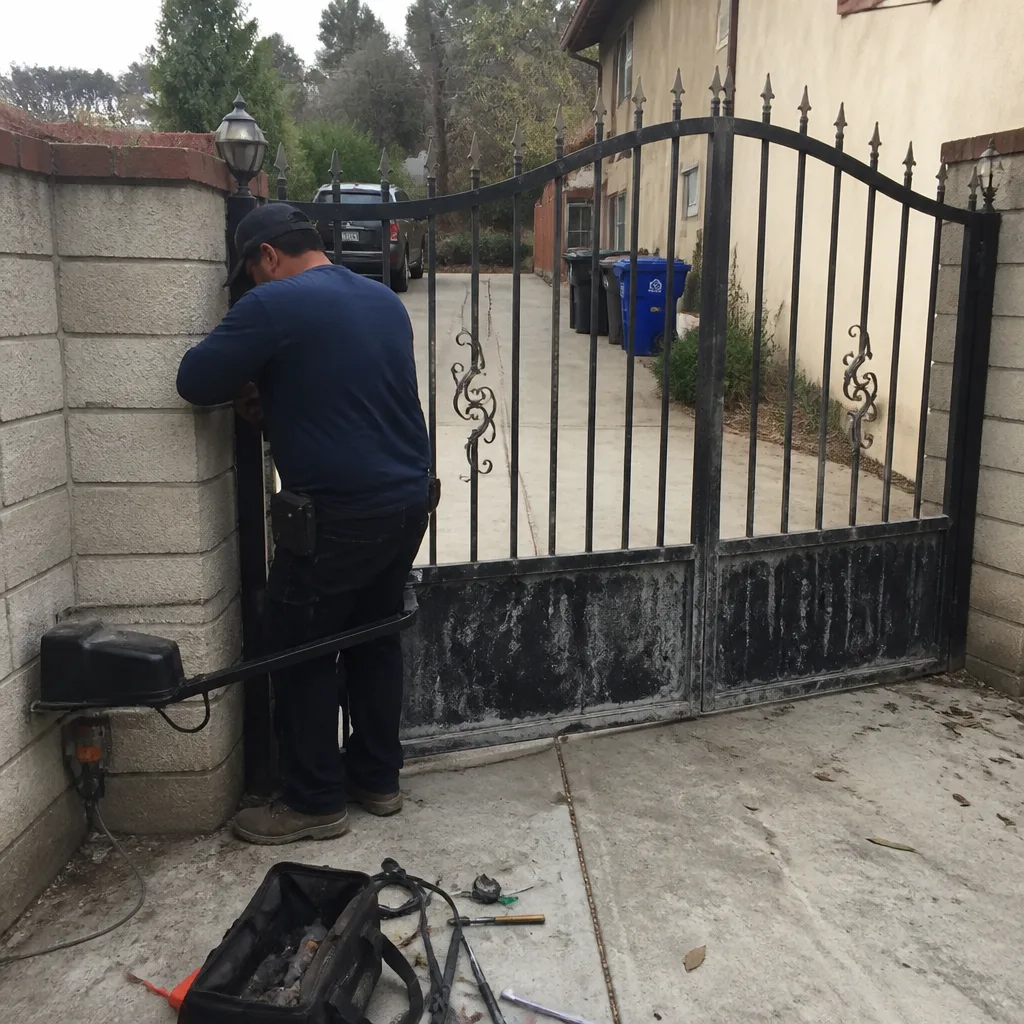 Before
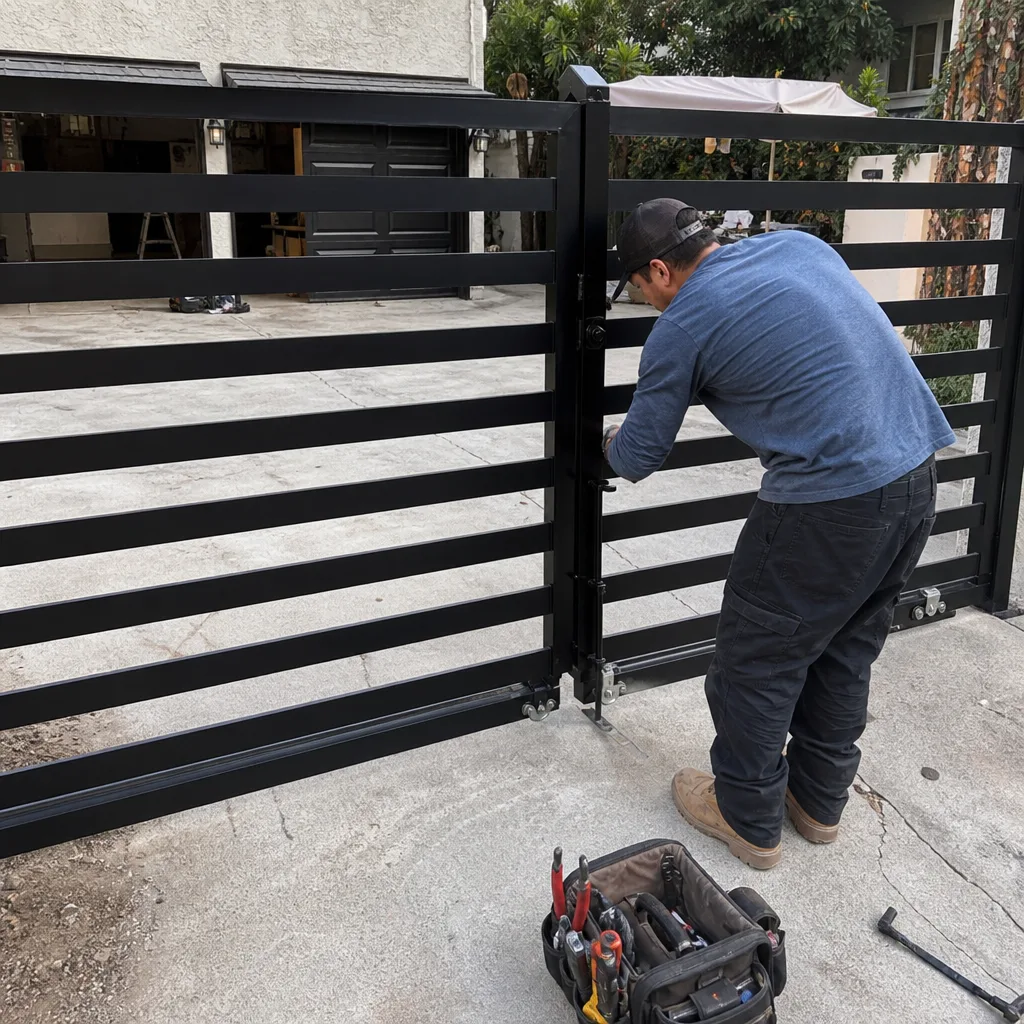 After
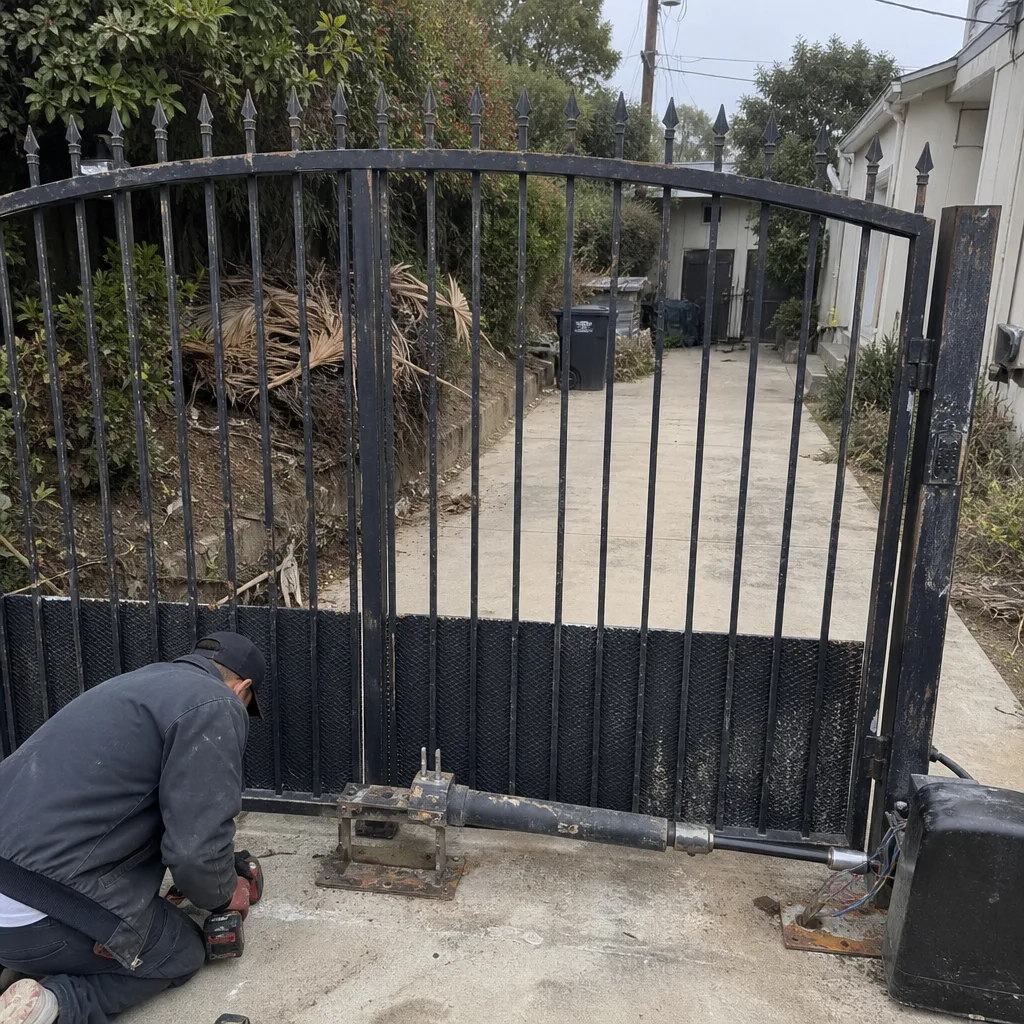 Before
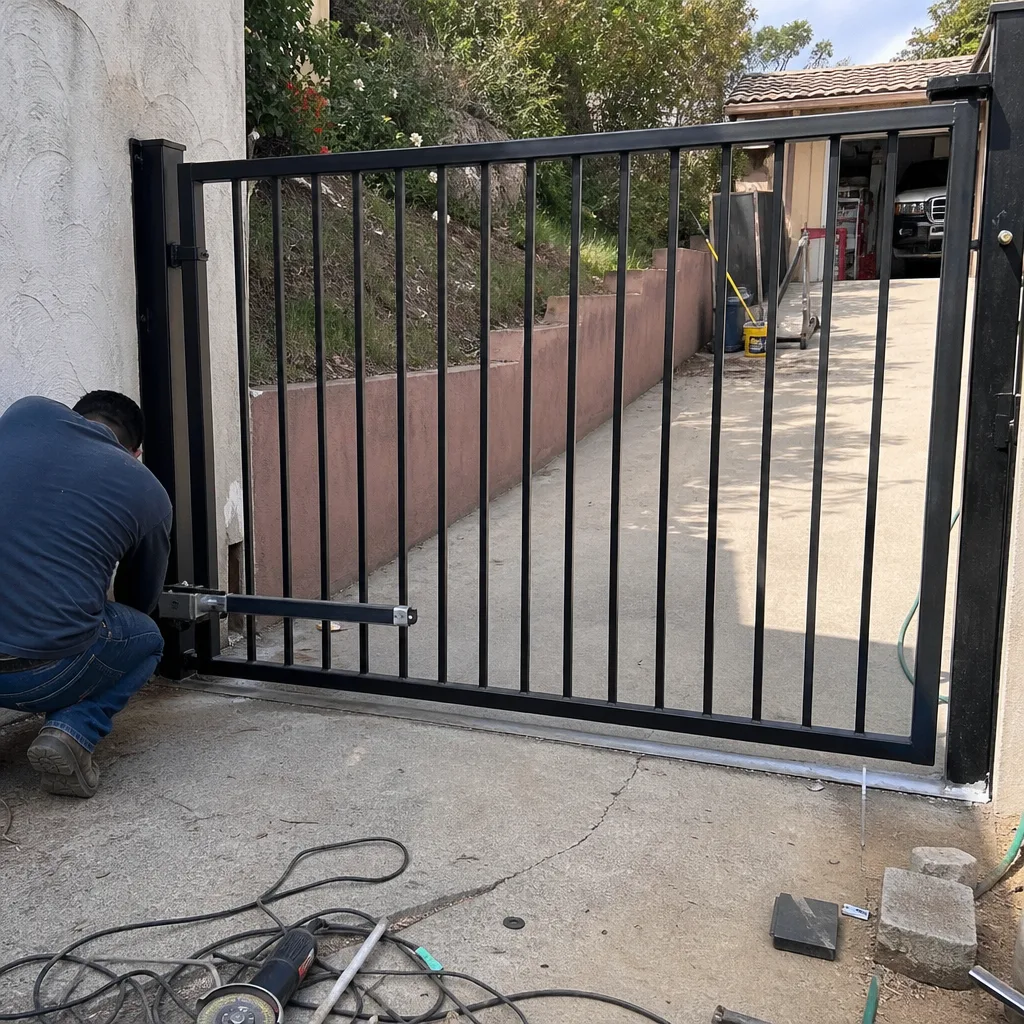 After
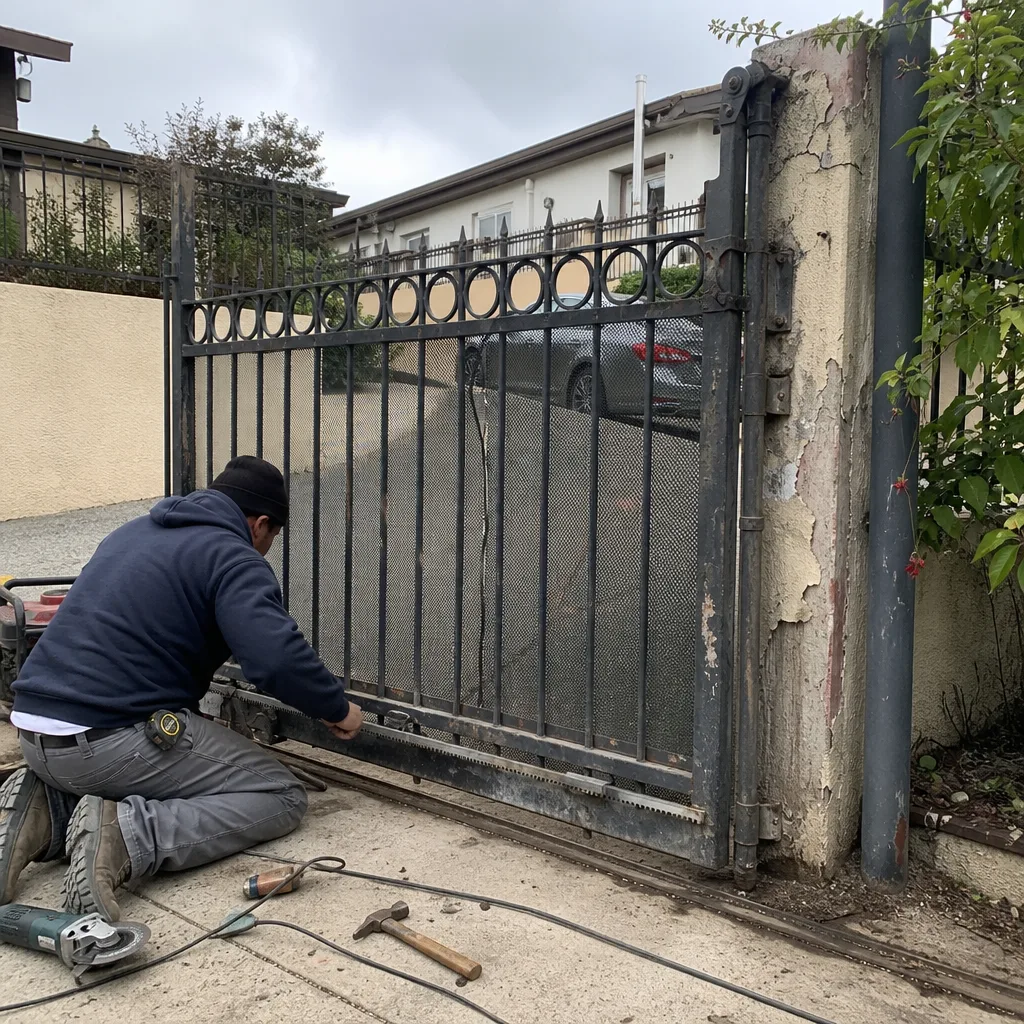 Before
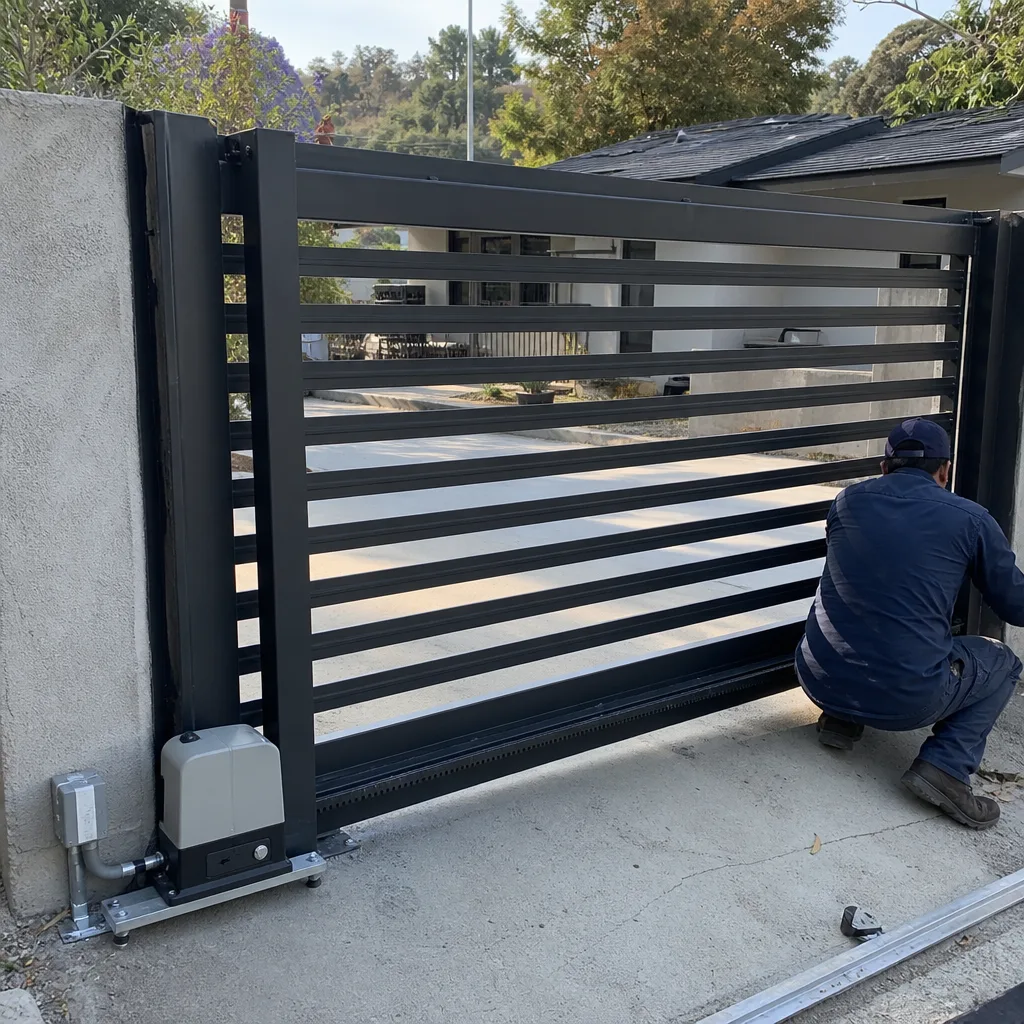 After